
Economic Weekly 30/2026, July 31, 2026
Published: 31/07/2026
Table of contents
Foreign employment compensates for Poland’s declining labor supply
+145,000 increase in the number of employed foreigners between December 2022 and December 2025
-215,000 decrease in the number of employed native Poles
77.3% → 79.2% increase in the employment rate among native Poles
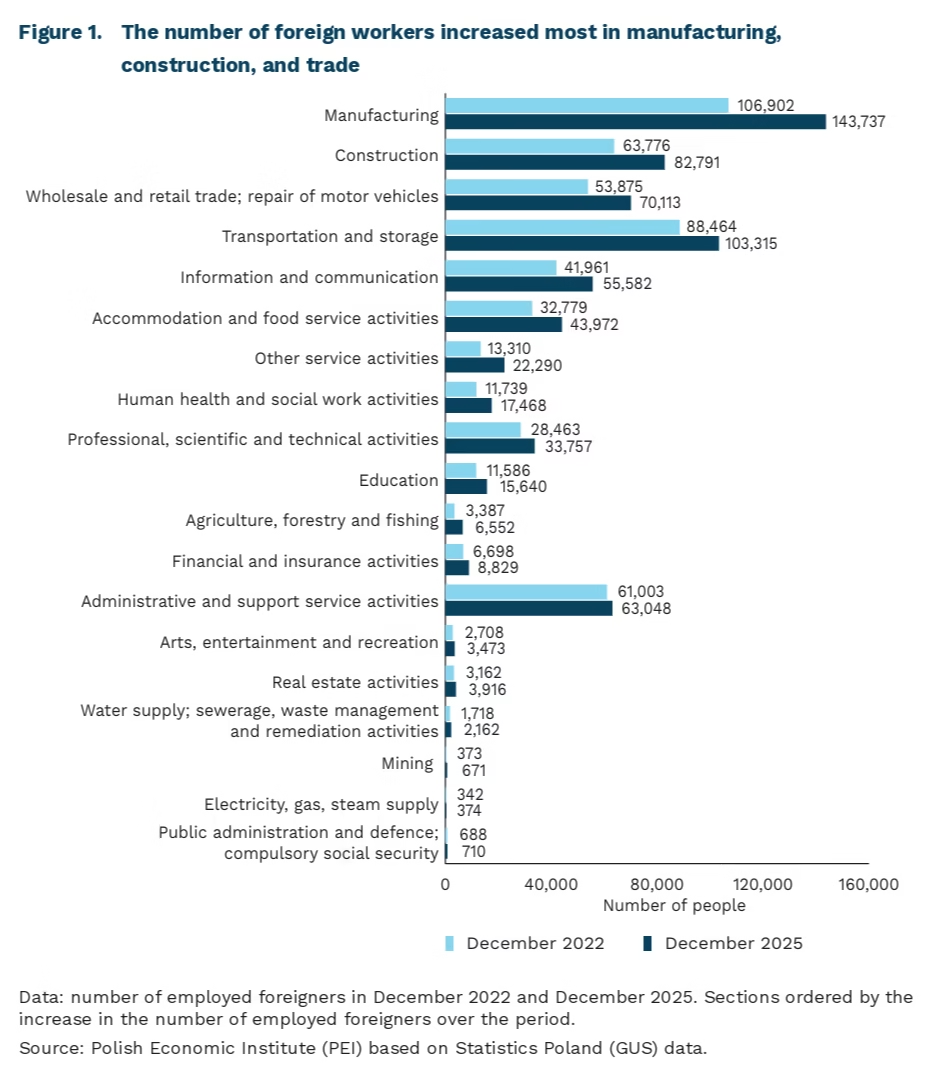
According to Statistics Poland (GUS) data, the number of employed foreigners rose by 145,000 between December 2022 and December 2025 (this category covers employees and the self-employed but excludes individuals working solely under civil-law contracts), while the number of employed natives fell by 215,000. However, the decline in the number of employed Poles coincided with a rise in the employment rate, which, according to Eurostat, increased among Poles aged 20-64 from 77.3% to 79.2%. At the same time, the Eurostat-estimated population of Polish natives in that age group contracted from 21.5 million to 20.5 million. This shrinking population mechanically exerted downward pressure on the number of employed natives even as the employment rate rose, pointing to demographic factors rather than the displacement of native workers by foreigners as the underlying driver of the decline.
Analysis at the county (powiat) level likewise reveals no crowding-out effect: between 2022 and 2025, an increase of one employed foreigner in a given county was associated with a statistically significant average increase of 0.25 employed natives. This relationship is correlational and may reflect, among other things, the fact that counties with greater labor demand attract both domestic and foreign workers simultaneously. However, the positive association is consistent with the findings of an IBS study on entrepreneurship, whose authors, employing a method that permits causal identification, demonstrated that the establishment of Ukrainian-owned firms did not crowd out Polish entrepreneurship – on the contrary, it increased the number of newly registered Polish companies.
Declarations by firms surveyed by PEI similarly suggest that the hiring of foreigners is primarily a response to labor shortages rather than a strategy for reducing labor costs by substituting foreign for native workers. Among firms that have employed, currently employ, or plan to employ foreigners, 70% cited the shortage of native workers as the reason. Likewise, successive readings of PEI’s Monthly Business Climate Index indicate that labor costs and worker unavailability have ranked, on average, among the four most frequently reported barriers to business activity over the past three years, alongside energy prices and economic uncertainty. A PEI report further projects that labor shortages will intensify. As a result of older workers exiting the labor market and smaller inflows from younger cohorts, total employment in Poland may decline by 2.1 million by 2035. The largest outflows of older workers are expected in industry (approximately 805,000 persons) and in trade and motor vehicle repair (approximately 423,000 persons).
The extent to which migration will be able to mitigate the continued decline in domestic labor supply remains an open question. To date, growth in foreign employment has concentrated in the sectors most exposed to this process: between 2022 and 2025, the largest increases were recorded in (+37,000), construction (+19,000), and trade and motor vehicle repair (+16,000). However, the scale of migration to Poland remains below the level that, according to ZUS simulations, would be necessary to maintain a stable old-age dependency ratio.
Marcin Lewandowski
An increasing number of startups in Poland are operating in the AI sector
the share of startups in the AI cluster rose by nearly 12 percentage points between 2013 and 2026
The most significant change in the structure of the Polish startup ecosystem in recent years has been the growing importance of artificial intelligence (AI). The share of companies using this technology as their primary area of activity (forming the so-called AI cluster) increased from 1.3% of startups founded between 2013 and 2016 to approximately 13% between 2023 and 2026. This represents an increase of nearly 12 percentage points the largest among all identified clusters. This change may reflect the global trend toward the widespread adoption of AI technology in business operations, as well as increased investor interest in AI-based projects, which encourages startups to highlight the applications of this technology in their profiles [1].
The second-fastest-growing cluster identified in the analysis was cybersecurity, whose share rose from approximately 1.7% to over 5%, marking a more than threefold increase in its significance. During this time, the share of the cluster covering cloud solutions and IT infrastructure also increased from approximately 1.7% to over 4% as did that of technologies related to health and medicine from approximately 7% to nearly 9%. These changes may indicate the growing importance of cross-cutting technologies (AI, cloud solutions).
The largest decline in market share, however, was recorded in the cluster covering media and sports solutions, where the share fell from 27% to 22%. Slight declines (about 2 percentage points) were also seen in the clusters related to computer gaming, tourism, and communication tools.
Some segments of the Polish startup ecosystem have shown long-term stability. The share of the educational and financial technology clusters remained similar between the 2013-2016 and 2023-2026 periods, suggesting their established position in the market structure. The cluster combining modern manufacturing and space technologies demonstrates similar resilience.
In the global startup ecosystem, there is an increasingly clear concentration around AI-native technologies and defense technologies. The Polish startup ecosystem is following the global trend in AI development, although specialized areas such as AI-native and DefenseTech did not emerge in the analysis as distinct, dominant clusters. This suggests that the growing importance of AI in Poland may stem from its increasingly widespread application across various areas of startup activity, as well as from the global trend and investor interest in AI-based technologies.
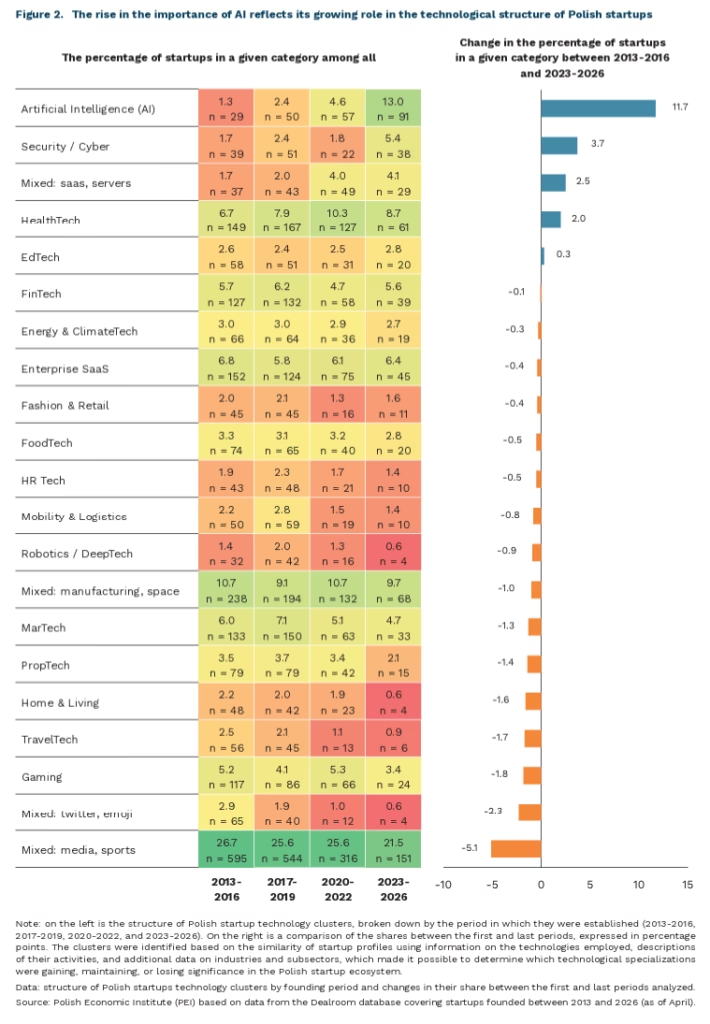
- The number of startups included in the analysis decreases over time from 2213 startups founded between 2013 and 2016 to 707 startups founded between 2023 and 2026 (as of April 2026). Dealroom is a database that is updated on an ongoing basis; the newest startups are added with a delay, so the figures for recent years may be underestimated. For this reason, the analysis was based on the shares of individual clusters within each startup founding period, which made it possible to compare changes in the technological structure independently of the number of companies.
Magdalena Lesiak
Poland gains relative advantage from the “new” US tariffs
3.2 percentage points is Poland’s relative advantage in terms of the trade-weighted average tariff rate on exports to the US
up to 10% are the tariff rates imposed on EU countries as a result of the new round of announced US tariffs
50% of surveyed companies that exported their products to the US did not feel any negative impact from the tariffs
The US administration is embroiled in an internal legal battle over tariffs. In February 2026, the US Supreme Court ruled that the “reciprocal” tariffs established by Trump in April 2025 were illegal. It found that the executive branch had no authority under the IEEPA [2] to impose tariffs for revenue-raising purposes. As a result, in February 2026 the administration established temporary tariffs – for a maximum of 150 days – under Section 122 of the Trade Act of 1974. With that period expiring, as of July 24th, the US established tariffs at two rates – 10% (for the EU and eighteen other economies) and 12.5% (including China, Brazil, and Vietnam). This time the administration chose Section 301 of the Trade Act, on the grounds of using or failing to counteract forced labour. New lawsuits have already been filed challenging the validity of this legal basis, which could mean these tariffs might be also struck down next year.
Poland, after Canada and Mexico, records the highest tariff advantage relative to other major suppliers. The difference in the US import-weighted tariff rate on goods from Poland compared with the average rate imposed on all competitors is 3.26 percentage points, based on 2024 trade data. This favourable relative gap versus competitors widened by nearly 1 percentage point compared with the period before July 24th. Among the largest suppliers, only Italy, Belgium, and Spain benefited from the new tariff regime more than Poland. This relative reduction in tariff rates stems from the fact that the EU and Taiwan received the most lenient treatment. Tariffs for these economies will not be increased by 10% as they were for India or the United Kingdom; instead, when combined with MFN3 base rates, they are not to exceed 10%. Combined with exemptions from these tariffs – for example, for the aerospace or pharmaceutical sectors – this creates relative advantages for individual exporters.
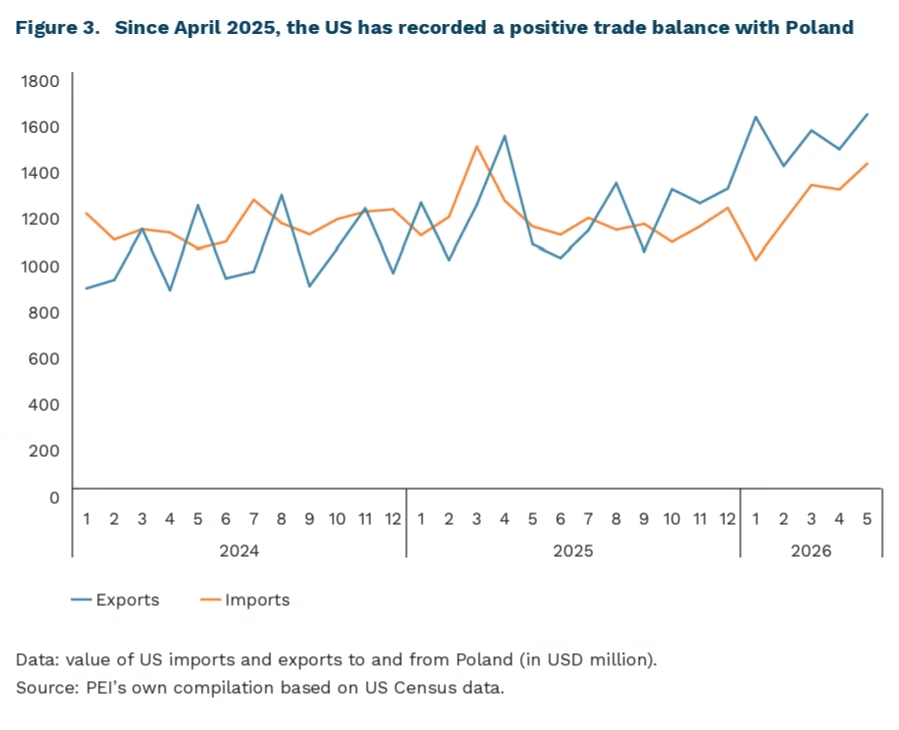
The value of imports from Poland to the US in the first five months of 2026 remained unchanged compared with the same period in 2025. However, in the first three months of this year, results were below last year’s levels, partly due to a high base effect – importers had front-loaded purchases at the start of last year in anticipation of new US tariff barriers. As a result, April 2026 saw a slight increase, and May a very strong increase (24%), in imports from Poland compared with last year. Raw materials – copper and silver (over 36% of the growth) – and aircraft engines (14% of the growth) accounted for more than 50% of this increase.
In PEI’s survey [4], conducted by Statistics Poland (GUS), only half of the Polish companies exporting to the US considered that the new American tariffs negatively affected their business in 2025. A survey found that in 2025, the direct negative impact of American tariffs affected 14% of all surveyed companies. Another 10% of companies felt an indirect negative impact through cooperation with firms that export to the US market as their end destination. In total, 27% of goods exporters felt a weakening of the economic situation in the EU market caused by the increase in American tariffs. The strength of the negative impact of American tariffs depended significantly on company size – large companies, with exports above EUR 10 million and employing more than 250 people, felt the negative effects of US protectionist policy to a greater extent. Poland’s relative advantage over other competitors in the American market will help cushion the costs associated with the tariffs.
2. International Emergency Economic Powers Act (IEEPA) – a law giving the US president the power to act in situations of international crisis.
3. Most Favoured Nation clause – a clause under World Trade Organization agreements prohibiting tariff discrimination between member states and requiring that tariff rates applied to member states be no less favourable than those applied to any other country.
4. Exporter survey conducted by Statistics Poland on behalf of PEI in April 2026.
The share of professionals is rising across different fields, but not necessarily in those most needed by the Polish economy
24% of all employed people in Poland were professionals in 2025
28% of all professionals in Poland in 2025 were engineers and ICT professionals combined
23% were, in total, graduates in engineering, manufacturing and construction and in natural sciences, mathematics and statistics among all highereducation graduates in 2024
Professionals – from engineers and programmers to doctors and teachers, as well as economists and lawyers – are the backbone of the modern economy [5]. Their defining feature is that they perform work requiring a high level of knowledge, most often confirmed by higher education. In some occupations, they rely directly on research findings, while in others they carry out activities essential to the functioning of society. They are the ones who translate knowledge into concrete innovations, as well as organizational improvements and useful services that increase productivity and the resilience of firms and the state, while also ensuring long-term socio-economic development.
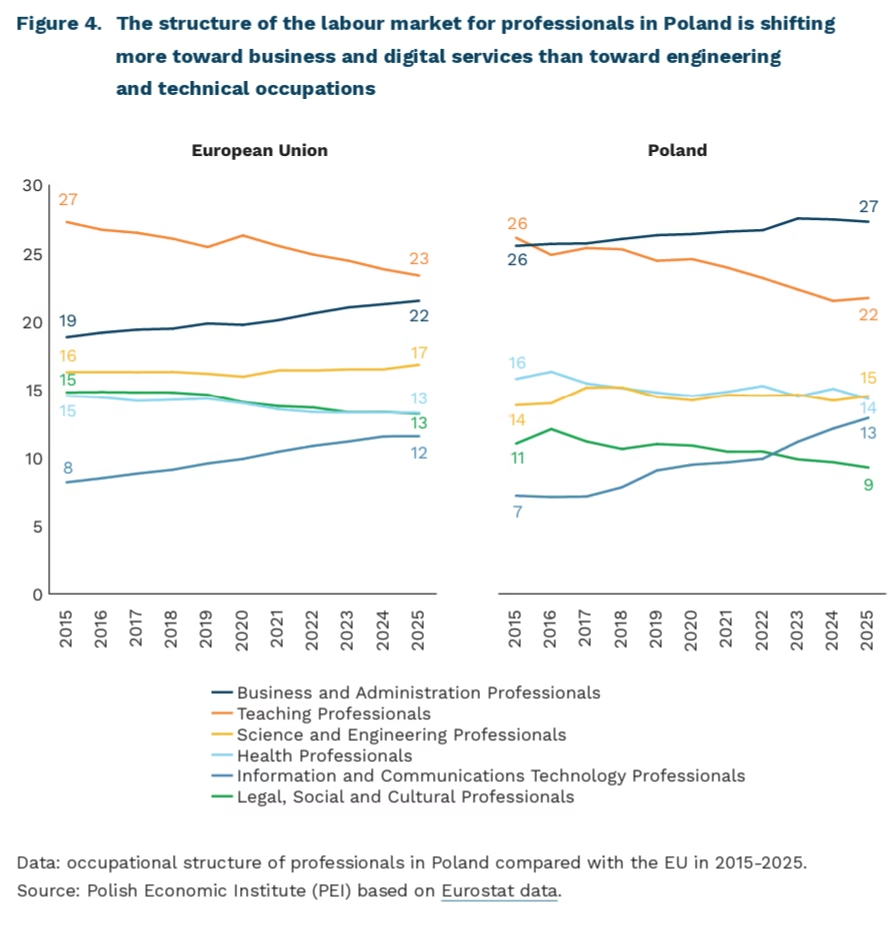
In Poland, the share of professionals in employment exceeds the EU average and continues to grow. In 2015, they accounted for just under 19% of all employed persons, while in 2025 their share rose to 24%. Over the same period, the share of professionals in the EU increased from 18% to about 23%. Professionals are the largest employed group in Poland. Their share is clearly higher than that of the next groups – technicians and associate professionals (18 percent) and craft and related trades workers (14%).
The internal structure of the professionals group in Poland differs somewhat from the EU average. The largest subgroup consists of business and administration professionals (27%), and their share is higher than the EU average (22%). Over the past decade, the strongest increase in Poland was recorded among ICT professionals, whose share rose from 7% to 13%. At the same time, the share of science and engineering professionals remained lower over this period (14-15%) than the EU average (16-17%).
The labour market for professionals is marked by a clear occupational concentration. In the ten most common occupations (out of 99 distinguished by Statistics Poland), 45% of all professionals in Poland are employed [6]. This group does not include engineering and technical occupations. Strong concentration makes the labour market more vulnerable to sectoral and technological shocks. At the same time, the importance of policies supporting lifelong learning and occupational mobility is increasing.
The picture of the labour market for professionals becomes more complete when we look at the profile of higher-education graduates. The dominance of graduates in social sciences over those in technical and engineering fields illustrates a structural mismatch between the higher-education system and the needs of a modern economy. Polish universities mainly produce graduates in social sciences [7] (47% in 2024), while the share of engineering and technical graduates is declining (from 19 percent in 2020 to 18% in 2024). This increasingly fails to meet the needs of an economy in which technical, digital and engineering competences are becoming more important, especially in sectors crucial for technological sovereignty, the defence industry and local content. If this trend continues, the gap between demand from the defence, energy and ICT sectors and the domestic supply of relevant competences will widen. The mismatch between labour-market needs and the supply of graduates with the relevant profile often has a regional dimension.
From the perspective of public policy, this recalls the idea of commissioned degree programmes implemented in Poland in 2008-2015. In principle, this was an attempt to correct the supply of competences by increasing the attractiveness of technical, mathematical and natural-science fields. As the Supreme Audit Office noted, the direction of the intervention was – in general – correct, while the problem lay in implementation and the instruments used. In an era of a global shift towards economies focused on economic security, supply-chain resilience and technological autonomy, higher education is becoming a tool of development policy rather than merely a public service [8]. A discussion about a new version of priority fields – linked to the defence industry, energy and digitalization – appears today not so much as an option, but as a necessity.
5. Professionals are one of the ten main occupational groups under the International Standard Classification of Occupations (ISCO08), developed and maintained by the International Labour Organization (ILO).
6. The ten most popular professions performed by specialists in Poland are: primary school teachers, sales specialists (excluding information and communication technologies), secondary school teachers (excluding vocational education teachers), application programmers, management and organisation specialists, advertising and marketing specialists, early childhood education specialists, administration and development specialists, human resources management specialists, and financial analysts.
7. Social sciences include, among others, economics, management, law, sociology, psychology and political science.
8. A striking example is China, which centrally directs academic priorities through national policy and funding decisions. In recent years, it has decided, among other things, to reduce more than 12,000 university programmes in the humanities, arts, linguistics and management, and to shift funding toward AI-related and strategic technology fields.
Cezary Przybył
Poland’s district heating sector is embarking on a process of deep decarbonisation
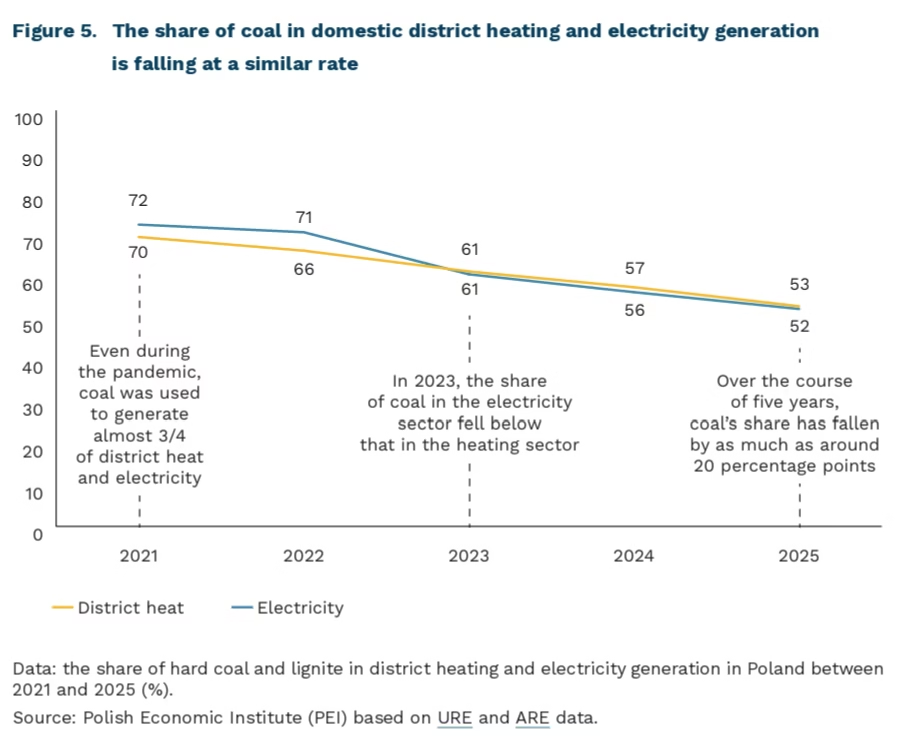
53% of district heat in Poland in 2025 was generated from coal
3 times lower turned out to be capital expenditure in Poland’s district heating sector in 2025 (PLN 5.6 billion) than the amount required for its transformation (PLN 14-16.5 billion) by 2040
up to 52% of district heat in Poland is to be generated from renewable energy sources – according to the District Heating Transformation Strategy to 2040
Poland’s district heating is the second largest in the EU in terms of heat production. In 2024, this production totalled 259 PJ (compared with 414 PJ in Germany) and accounted for almost 13% of total EU production. District heat is generated by two types of companies – those that sell heat to external customers and those that use it for their own needs.
District heating in Poland is – just like the electricity sector – dependent on coal. In 2025, the share of this fuel in district heat generation in Poland stood at just under 53% (compared with 52% in electricity generation in the power sector). The rate of decline in this fuel’s share in generating these energy vectors is also similar: over the last five years (2021-2025), district heat production from coal fell by 16.7 percentage points, whilst electricity generation fell by 20.3 percentage points.
However, the ongoing transformation of the district heating sector presents a relatively greater challenge than that of the electricity sector. Among the barriers – apart from dependence on coal – is the sector’s difficult financial situation. It is characterised by low profitability among district heating companies (between 2021 and 2025, it was positive only in 2025), which limits the capital expenditure required for the transition (in 2025, this amounted to PLN 5.6 billion). The District Heating Transformation Strategy to 2040 estimates that by 2040 these investments should amount to PLN 14-16.5 billion annually (a total of PLN 197-231 billion) and be directed towards investments in existing and new district heating infrastructure. Investment opportunities in this sector are also constrained by: the ongoing need to modernise district heating infrastructure, limited access to domestic and EU funding, end-users’ sensitivity to rising heat prices, and the cost burden of purchasing CO₂ emission allowances under the EU ETS.
The District Heating Transformation Strategy to 2040 (DHTS) and the National Energy and Climate Plan (NECP) set out the objectives for the transformation of district heating systems. These documents envisage the sector’s development through an increase in the share of renewable energy sources in district heat production (up to 52% in the DHTS and 44-57% in the NECP by 2040), the use of power-to-heat technologies (heat pumps, electric boilers and heat storage systems) and waste heat, as well as improvements in energy efficiency. These measures are intended to contribute to the thorough decarbonisation of district heating and to ensure that, by 2040, it is based entirely on low- and zero-emission sources.
However, the decarbonisation of district heating also requires changes in other sectors. The electrification of the heating sector, planned through the implementation of power-toheat technology, will require the dynamic development of the national electricity sector, in particular the expansion of zero-emission sources of electricity (renewables and nuclear power over the next decade). Given the sensitivity of heating companies’ operating costs to the price of natural gas, it will also be necessary to secure and minimise the costs of its supply, as, in the context of heat production, this fuel may temporarily serve as a bridge between coal and zero-emission sources. Thermal modernisation of buildings will also become important, as it will reduce their heat consumption and enable existing district heating networks to be adapted for better integration of zero-emission heat sources (e.g. heat pumps). Finally, as we noted when highlighting the challenges facing the current European Commission, some measures (e.g. regarding financial mechanisms) should be implemented at EU level.
Wojciech Żelisko
Value of savings accumulated in PPK continues to grow
PLN 53.76 billion the net asset value of target-date funds at the end of June this year
7.71 percentage points the year-on-year increase in the PPK participation rate
The value of assets accumulated in Employee Capital Plans (PPK), as well as the number of programme participants, continues to grow steadily. At the end of June, the net assets of target-date funds reached PLN 53.76 billion, PLN 0.98 billion more than a month earlier. A total of 4.4 million people were saving through PPK, holding 5.48 million active accounts. The participation rate stood at 61.43%, up by 7.71 percentage points year on year, confirming growing interest in the programme. At the same time, a significant proportion of eligible employees remain outside the system, while participation levels vary considerably across regions and sectors. The lowest participation rates were recorded in the Świętokrzyskie (34%), Warmińsko-Mazurskie (35.4%) and Lubuskie (38.8%) voivodeships. The Mazowieckie Voivodeship remains the clear leader, with participation reaching 85.2%. There is also a substantial difference between the public sector, where the participation rate is 35.25%, and the private sector, where it stands at 70.61%.
Funds accumulated in PPK are invested through target-date funds whose investment policies are adjusted to participants’ age. On an annual basis, the highest average rate of return [9] was achieved by 2055 target-date funds, at 22.36%. Long-term results are also favourable: over a five-year period, the highest average rate of return, at 82.42%, was recorded by 2065 target-date funds. Funds with more distant target dates, intended for younger participants, allocate a larger proportion of their assets to equity instruments, primarily shares. By comparison, funds intended for people aged 60 or over may invest no more than 15% of their assets in equities, whereas for participants who have at least 20 years remaining before reaching the age of 60, the proportion ranges from 60% to 80%. Such a portfolio structure increases the potential for savings growth but is also associated with greater volatility in investment performance.
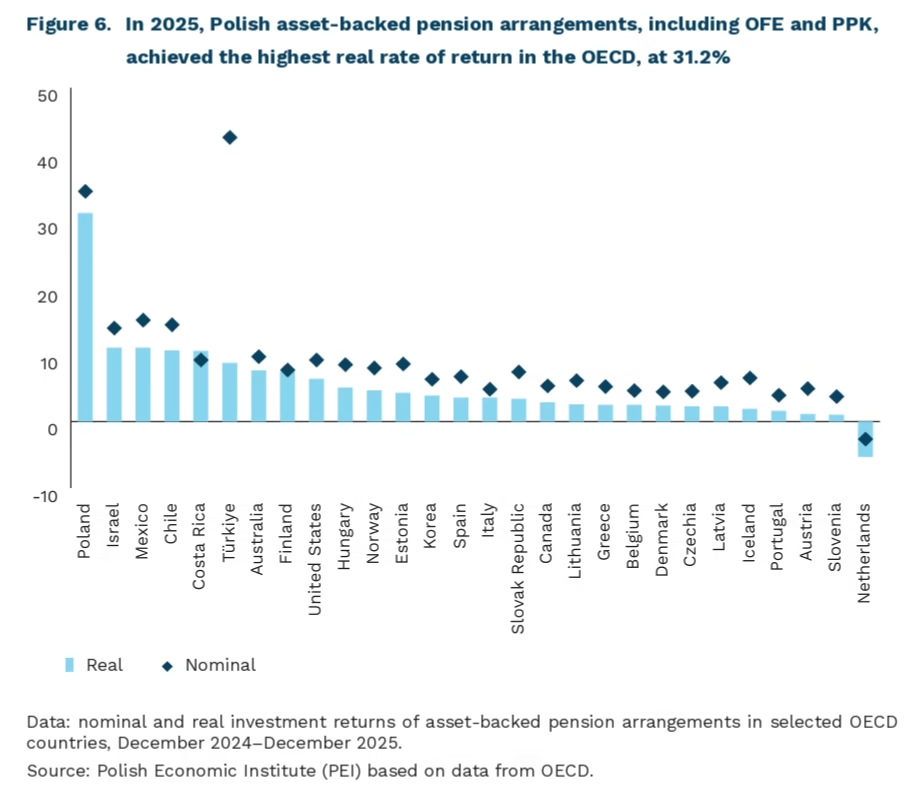
In recent years, financial market conditions have favoured the equity components of both PPK and Open Pension Fund (OFE) portfolios, resulting in high rates of return. According to OECD data, in 2025 Poland achieved the highest real investment return among the countries analysed for asset-backed pension arrangements, at 31.2%. This result reflected both strong performance on the Warsaw Stock Exchange and an exceptionally high equity allocation of 90.4% of total assets. This share results from the size of the assets and the specific structure of OFE portfolios following the 2014 reform. Consequently, OFE assets, amounting to approximately PLN 338 billion, have become dominated by equities, primarily shares in companies listed on the Warsaw Stock Exchange. In 2025, domestic equity instruments accounted for 80% of OFE portfolios, while foreign equities represented approximately 11%. Although PPK funds pursue diversified investment policies, regular contributions from employees and employers are making them one of the most important sources of new, long-term capital in the Polish capital market. Some of these funds are invested in shares of domestic companies, which is becoming particularly important amid the gradual transfer of OFE assets to the Social Insurance Institution (ZUS) under the safety slider mechanism.
9. The data do not include PPK funds managed by Nationale-Nederlanden PTE, Pocztylion-Arka PTE and Vienna Life TUnŻ VIG.
Piotr Kamiński
Business sentiment is improving faster than sales and orders
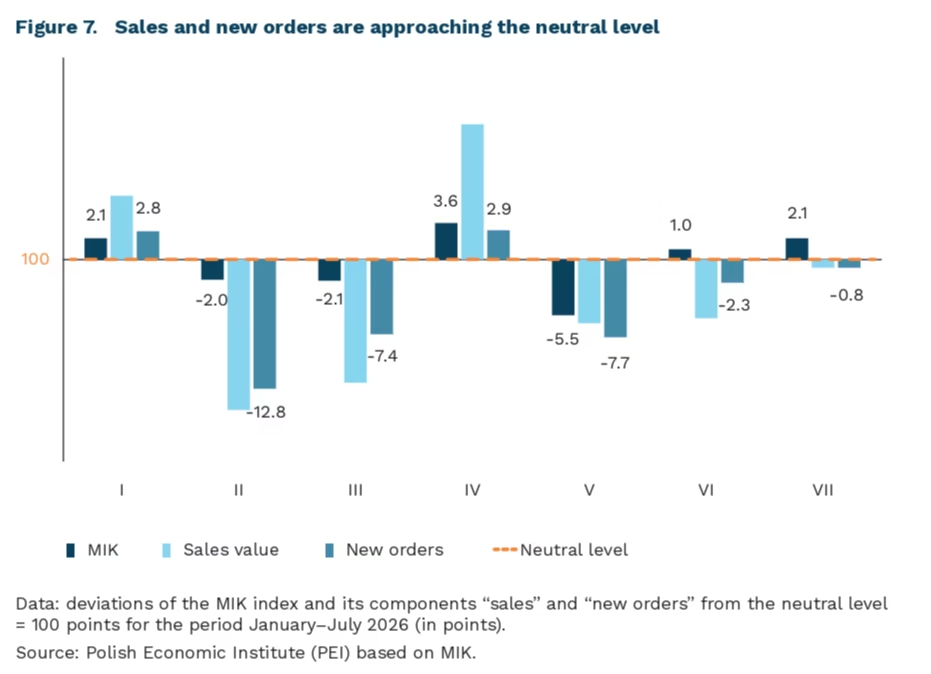
102.1 points the Monthly Business Climate Index (MIK) reading in July 2026
99.2 points the July MIK readings for sales and new orders
-28 percentage points the demand gap in the market in Q2 2026
-10.2 points the current consumer confidence indicator in July
In July, business sentiment improved, as reflected in the latest reading of the Monthly Business Climate Index (MIK), which stood at 102.1 points. This means that following June’s 6.5-point increase to 101.0 points, positive sentiment has outweighed negative sentiment for the second consecutive month. The index value is above the neutral level (100), primarily due to a positive assessment of financial liquidity and a stable labour market situation. At the same time, the sales and new orders indicators increased both month on month and year on year, although negative assessments still prevailed among businesses. Since the beginning of 2026, April and May were the only months in which the proportion of companies reporting increases in sales and orders was higher than the proportion reporting declines. However, the percentage of companies reporting no change in this regard has risen since the start of the year. The data suggest that demand is gradually recovering, but the improvement is not yet being felt by most companies.
In the second quarter of 2026, the supply of goods and services offered by businesses continued to exceed demand, although the scale of the surplus decreased slightly, according to the NBP Quick Monitoring Survey. The demand gap totaled -28 percentage points and has remained negative since 2023. This means that companies were more likely to report an excess supply of products and services than insufficient capacity to provide them. The largest oversupply was observed in the consumer goods market: for durable goods, the gap stood at -46 percentage points, and for non-durable goods, at -38 percentage points. The only area where demand exceeded supply was non-market services, primarily health care, which shows that demand remains stronger where the ability to forgo or postpone a purchase is limited.
Limited demand also affects companies’ capacity utilisation. In the second quarter of 2026, most companies considered their production capacity sufficient for their order backlog, and slightly more companies assessed it as too small rather than too large, according to MIK data. At the same time, in the second quarter of 2026, the capacity utilization rate fell to nearly 82 per cent and was below the long-term average. Companies have room to increase production without incurring significant costs to expand their capacity. The weaker order book reflects consumer caution, despite a gradual improvement in consumer sentiment. General business climate indicators improved across all sectors in July, pointing to stabilisation or an improvement in overall economic conditions. The recovery in demand continues to be held back by consumer caution: the current consumer confidence index stood at -10.2, compared with -14.0 last year. Conditions for increasing production are gradually improving, but the demand impulse remains too weak for companies to make full use of their available capacity.
Based on the above data, it can be concluded that the current improvement in companies’ financial health stems more from their available financial resources than from a significant increase in the number of customers. Companies are prepared for an economic downturn, but financial resilience alone does not lead to increased production. Without sustained sales growth, companies may continue to take a cautious approach to hiring or new investments. At the same time, supply exceeding demand may help reduce inflationary pressure. When sales are weaker and inventories are excessive, businesses have less scope to raise prices without risking the loss of customers.
Aleksandra Wejt-Knyżewska
