
Economic Weekly 40/2026, October, 10, 2026
Published: 09/10/2026
Table of contents
Poles’ incomes are growing in line with the economy, but not equally for everyone
4.8% the real growth in median disposable income per capita in 2025
88% of the EU average: the level of consumption per capita in Poland in 2025
In 2025, household incomes grew at a moderate pace, close to the rate of change in the economy as a whole. According to Statistics Poland’s Household Budget Survey (HBS, Statistics Poland), median disposable income per capita rose in real terms by 4.8% in 2025, to PLN 3,064, while the mean rose by 6.7%, to PLN 3,500 (in 2024, the mean grew by 14.1%). At the same time, the average wage in the national economy increased by 5.3% in real terms, GDP by 3.6%, and household consumption by 3.7%. Various sources thus point in the same direction: the growth in household incomes in 2025 was moderate, lower than in 2024 and close to the pace of economic growth.
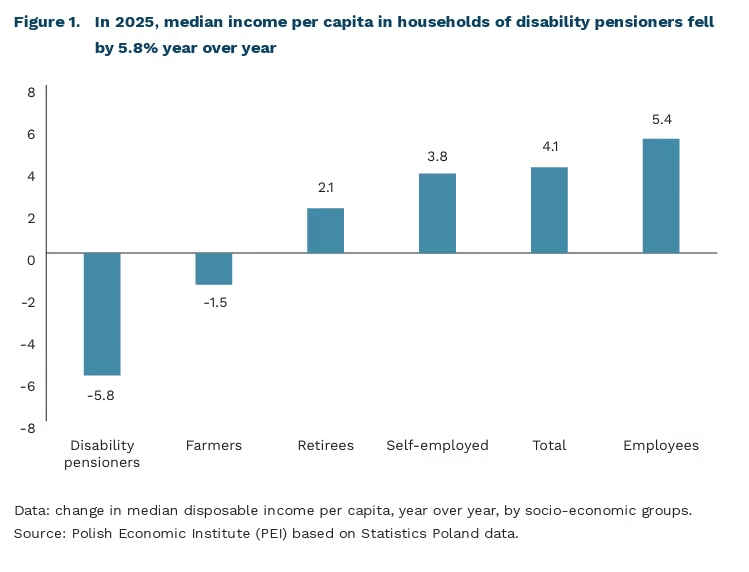
In 2025, the incomes of the more affluent part of society grew faster than incomes overall. According to HBS data, the ratio of the median to the mean fell from 89.2% to 87.5%, while the share of the richest 10% in total income rose from 23.5% to 24.6%. However, we can assume that HBS data underestimate the scale of income inequality in Poland. A study combining survey and tax data for 2000-2018 shows that the richest 10% of the population accounted for 37.4% of total income, which points to a much higher level of income inequality than HBS data suggest. Poles’ economic situation is largely shaped by their main source of income: the median income of retirees rose by 2.1% in real terms, while that of disability pensioners fell by 5.8%. Incomes grew most strongly among employees (+5.4%) and the self-employed (+3.8%).
HBS data for 2025 show a spectacular increase in farmers’ incomes in 2025, but a closer analysis reveals that most farmers did not experience a significant rise in income. The average disposable income per capita in farmers’ households amounted to PLN 4,159 and was 21.4% higher in real terms than a year earlier. However, it seems that we cannot conclude from this that farmers’ economic situation improved radically. Over the same period, the median income in this group rose only from PLN 2,200 to PLN 2,246, which means it fell slightly in real terms. Meanwhile, the ratio of the median to the mean dropped from 66.5% to 54%. This means that the observed increase in the mean was driven by income growth among a small number of households with very high incomes, while the income of a typical farmer (measured by the median) remained unchanged in real terms.
Despite their dynamic growth in recent years, Poles’ incomes are still clearly below the EU average. According to Eurostat, between 2004 and 2024 real household disposable income per capita, including free public services, increased by 91% in Poland, compared with 22% in the EU as a whole. Only Romania (134%) and Lithuania (95%) recorded faster income growth. The catching-up process has not slowed down in recent years either: since 2019, incomes in Poland have risen by 16% in real terms, more than twice the EU average. This was driven by rapid wage growth amid low unemployment and, since 2016, by the expansion of social transfers, first the 500+ child benefit and, from 2024, the 800+ benefit. Nevertheless, after adjusting for price differences, income per capita in Poland in 2024 was still below the EU average, similar to that in Hungary, Slovakia and Croatia, and far from the levels in Germany and Austria. Given the significant increase in Poland’s budget deficit in recent years, the progressive ageing of Polish society and the resulting reduced scope for raising benefits and transfers, further narrowing of the gap with the EU average will depend primarily on growth in labour productivity and wages in the economy.
Paula Kukołowicz
Polish teachers compared to other countries: more satisfied with working conditions, less with salaries
80.3% of Polish teachers are satisfied with their non-financial working conditions
20.5% of Polish teachers are satisfied with their remuneration
10.4% of teachers in Poland feel valued by society, marking a 7.5 percentage point drop compared to 2013
In the subjective assessment of their non-financial working conditions, Polish teachers rank near the top among OECD countries – holding the 6th place alongside Austria and Lithuania – whereas in terms of salary satisfaction, they rank 3rd from the bottom. This asymmetry is clear in the results of the TALIS 2024 survey presented in the OECD report. The findings show that only 20.5% of teachers in Poland declare satisfaction with their remuneration, while as many as 80.3% report satisfaction with other working conditions (excluding pay) [1]. For comparison, across the OECD average, 38.7% of teachers report satisfaction with their remuneration, and 68.4% with other working conditions.
Such a high level of satisfaction with non-financial job aspects among teachers is driven, among other factors, by good work organization and high flexibility. The student-to-teacher ratio is close to the OECD average or more favorable, particularly at the lower secondary level, reducing teachers’ daily workload. Furthermore, the teaching profession involves relatively lower working hours. PIAAC data shows that Polish teachers work an average of 2.2 hours less per week than other tertiary-educated professionals in Poland (38.6 hours vs. 40.8 hours). This result also compares favorably to the OECD average, where teachers work an average of 40.8 hours per week. Work flexibility is further confirmed by data on time spent in school buildings: at the lower secondary level (grades 5-8), in-class teaching hours in Poland amount to 486 annually, representing about 34% of the total 1,440-hour working time (compared to the OECD average of 710 hours and 45% of 1,579 hours, respectively). A similar ratio holds across other education levels, with the exception of early childhood education.
Even salary increases for teachers over the last decade were not enough to boost their reported financial satisfaction. Between 2015 and 2025, real wage growth in this sector in Poland reached a cumulative 41 percentage points, ranking 2nd among OECD countries, right behind Hungary. Despite this, teachers still earn 13% less than other higher-educated professionals in the country. This metric also remains low compared to OECD countries, where the average ratio of teachers’ earnings to salaries of tertiary-educated workers is 91%, reaching as high as 169% among top performers like Costa Rica and Türkiye.
Beyond financial issues, teachers also experience a lack of feeling valued by society – a widespread phenomenon across most OECD countries. In 2024, only 10.4% of teachers in Poland believed their work was valued by society, down by 7.5 percentage points from 17.9% in 2013. This figure is more than twice as low as the OECD average (21.7% in 2024 compared to 30.9% in 2013).
Teachers’ perception of low social appreciation is not reflected in CBOS survey data, according to which 79% of Poles express high respect for the profession. This contrast likely stems from different reference points among respondents: teachers’ assessment of their professional status is shaped through daily interactions rather than abstract survey scenarios. As ZNP (Polish Teachers’ Union) research indicates, teachers frequently face criticism and questioning of their competencies from parents. Academic literature also highlights the significant impact of salary on professional prestige and attractiveness – relatively lower teacher pay contributes directly to their feelings of being undervalued.
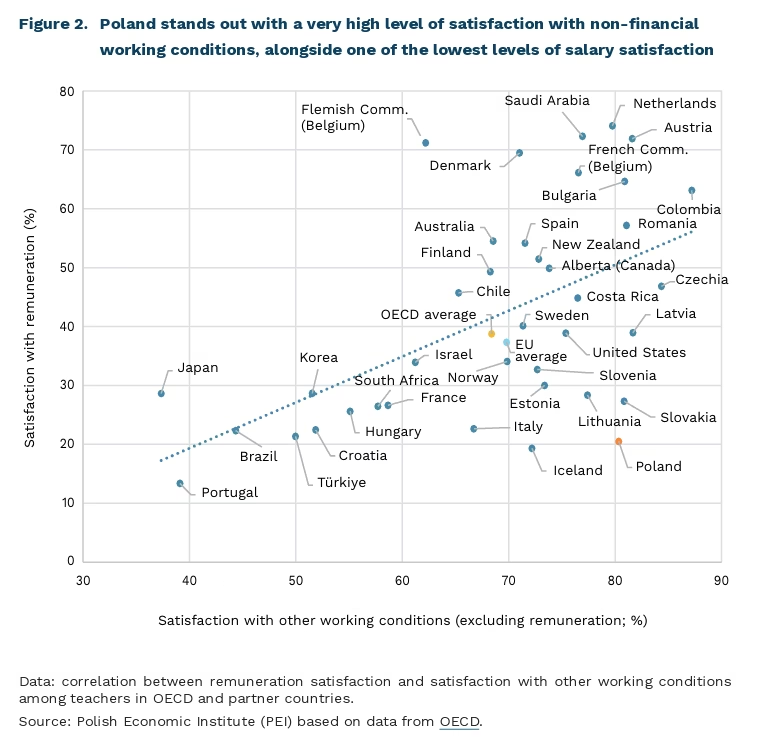
- The data on satisfaction with pay and other terms and conditions of employment relate to teachers at lower secondary level (in Polish schools: Years 5-8 of primary school, formerly Years 1-3 of lower secondary school).
Marta Seredyńska
France and Germany push for a tougher EU stance on China trade
0 times: the EU has not yet used its Anti-Coercion Instrument
EUR 207 billion was the EU’s trade deficit in goods with China in the first half of 2026
Threefold was the decline in German car exports to China between 2022 and 2025
France and Germany are calling for a more assertive EU trade policy. A joint letter from the German Chancellor and the French President to the President of the European Commission, together with an accompanying non-paper, was published on 5 October – ten days before the European Council summit devoted to trade relations with China, and three days before EU Trade Commissioner Maroš Šefčovič’s visit to Beijing.
This marks a breakthrough shift in Germany’s position on EU trade policy, particularly with regard to relations with China. Until now, Germany has supported an open EU market in order to secure the best possible access to foreign markets. In doing so, Berlin also protected its own companies, which profited from their presence on the Chinese market. Two years ago, Germany voted against EU countervailing duties on electric vehicles from China. France, by contrast, has favoured an active industrial policy, including stronger protection of the single market.
The centrepiece of the proposal is a new trade defence instrument modelled on Section 301 of the US Trade Act of 1974. The European Commission would gain the power to act swiftly to restrict access to the EU market in cases of unequal treatment of EU and third-country operators or other distortions. The key difference from other EU trade procedures would be a mechanism under which measures proposed by the Commission would enter into force unless a qualified majority of Member States rejected them. The instrument is intended to provide the full range of options – from sectoral measures to a complete block on access to the EU market – and to address all kinds of market distortions, “from a single product to a whole sector, from subsidies to currency manipulation”.
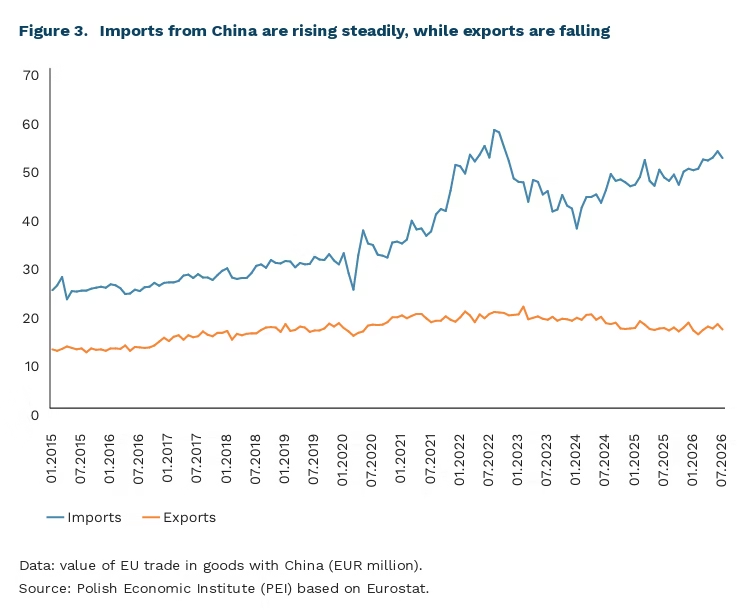
The Franco-German proposal reflects the EU’s powerlessness in the face of what has been dubbed the “China shock 2.0”. The EU’s trade deficit with China is at a record high: in the first half of 2026 it exceeded the level of the second half of 2022, when a record deficit was recorded in the wake of the pandemic. In Germany, car manufacturers are cutting jobs as they lose market share both in the EU, where China’s share of new combustion-engine and hybrid car sales is growing, and in China itself (German car exports there have fallen threefold since 2022). At the same time, unified support for assertive action is hard to secure within the EU: Beijing “buys” the backing of individual Member States through investment (e.g. in Hungary and Spain) or resorts to economic pressure (e.g. against Lithuania, Sweden and Poland). Adopting new mechanisms will take time, however, and companies are already facing intense competition, so all existing market protection tools should be used in the meantime. Germany’s shift in stance could also help turn the EU’s announcements of a more assertive policy into reality, which may strengthen the Trade Commissioner’s position in the ongoing talks in Beijing.
Michał Kowalski, Marek Wąsiński
Lifestyle diseases hinder potential economic growth
up to 90% of the economic costs caused by diabetes, COPD, and chronic cardiovascular diseases result from a decline in labor supply
3.65% of its potential GDP could lose the Polish economy annually by 2050 due to diabetes, COPD, and chronic cardiovascular diseases
The decline in labor supply accounts for the majority of economic losses caused by chronic diseases such as diabetes, chronic obstructive pulmonary disease (COPD), and cardiovascular diseases. According to IHME data, these diseases could affect approximately 1.4 billion people worldwide in 2023. An OECD analysis shows that between 83 and 90% of the total economic burden these conditions impose on the studied countries stems from reduced labor force participation and lower labor productivity. Developing these diseases is associated with the risk of premature mortality and forced occupational inactivity, consequently removing skilled workers from the labor market and forcing patients onto early disability pensions. Simultaneously, among those who remain employed, chronic health issues contribute to absenteeism and consistently reduced productivity. The remaining 10 to 17% of economic losses consist of healthcare expenditures which, under a successful prevention scenario, could be redirected toward productive investments supporting economic growth.
Improving public health concerning these diseases could generate direct savings for the government budget. These would result from reduced morbidity, permanently eliminating the need to finance long-term and capital-intensive treatment processes for a large group of patients. However, the structure of these benefits would vary depending on the specific condition. Reducing the treatment costs of diabetes and COPD would constitute net savings for public finances. In the case of chronic cardiovascular diseases, which carry a high risk of premature death, prevention would not only yield treatment savings but also significantly extend citizens’ life expectancy. The resulting medical savings would, nevertheless, outweigh the associated social transfers (including longer periods of pension payments).
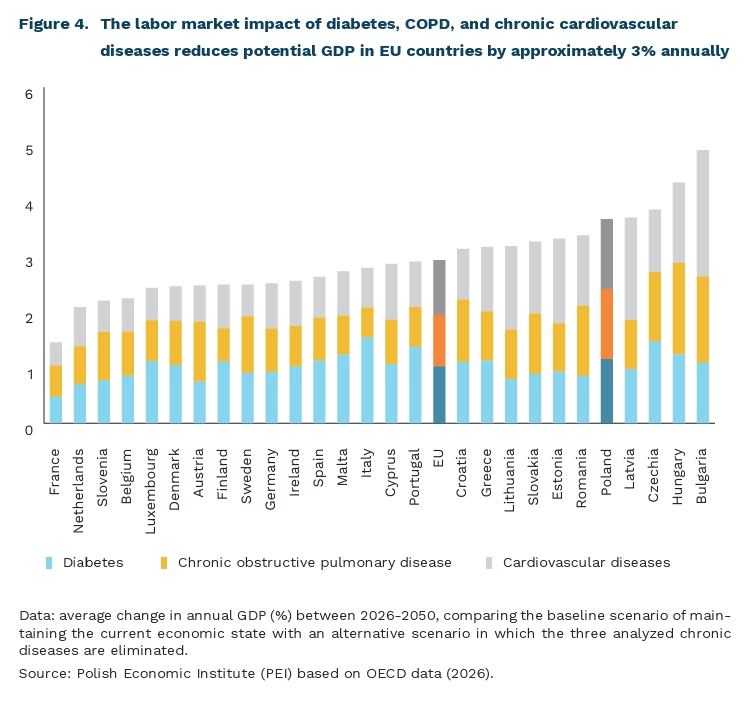
By 2050, these diseases could cost European Union countries nearly 3% of their potential GDP annually, with these estimates reflecting solely labor market losses. The Polish economy is more vulnerable in this area – potential annual GDP losses in Poland could average 3.65%. OECD projections indicate that unemployment, absenteeism, and lower productivity among people struggling with chronic cardiovascular diseases will reduce Poland’s potential GDP by an average of 1.26% per year. Almost identical losses (1.25%) will be generated by the impacts of COPD, while the economic burden of diabetes will reduce this indicator by 1.14%.
With an aging population and a shrinking labor force, systemic prevention of chronic diseases becomes a crucial tool for public policy. Interventions targeting lifestyle diseases can bring EU member states multidimensional benefits extending beyond public health protection. Effectively mitigating key risk factors – with a particular focus on obesity and smoking – could provide lasting relief to healthcare systems, while primarily stabilizing public finances and stimulating long-term economic growth.
Karolina Rutkowska
Use of social media is often associated with experiencing life difficulties
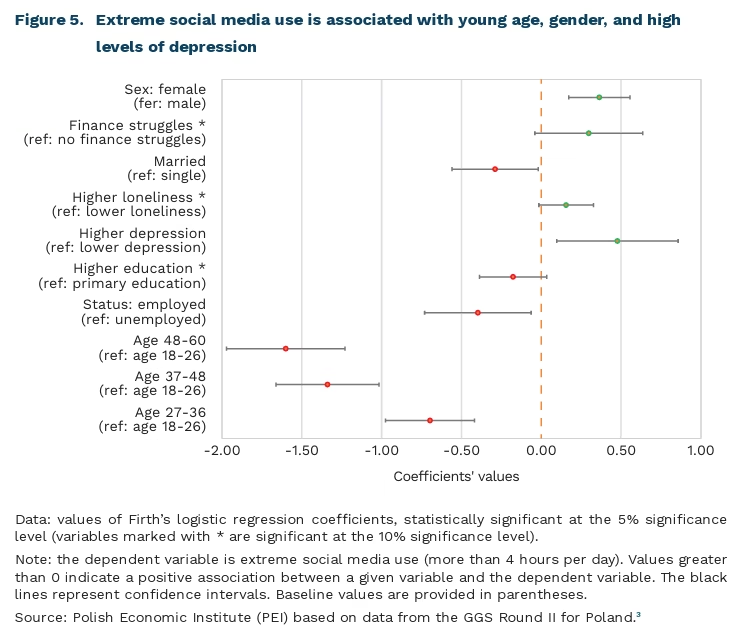
3 times more likely to report extreme social media use (more than 4 hours a day) are people aged 18-26 compared to those aged 27-60
78% that is how much more likely a person with high levels of depression is to use social media for more than 4 hours a day
An analysis of the latest data from the Generations and Gender Survey [2] (GGS) for 2025/2026 in Poland revealed that 51% of people aged 18-26 report using social media for at least 2 hours a day. Among the remaining individuals, this percentage is only 18%. Even greater disparities are observed in the case of more active usage, i.e., more than 4 hours a day (17% and 5% respectively).
An extended analysis provides grounds to suspect that social media use may be linked to the stress resulting from life difficulties and crises. The results of ordinal logistic regression suggest that young people (ages 18-26), who are more prone to depressive states and experience a stronger sense of loneliness, are more likely to spend more time on social media. Among those who are employed or in a relationship, there is also a positive correlation between the number of hours spent on social media platforms and stress related to work as well as relationship crises. In contrast, extreme social media use (more than 4 hours per day) is strongly associated with high levels of depression (a 78% higher likelihood) and young age (18-26) (more than twice the likelihood) [4].
This relationship is consistent with scientific theories that treat internet use similarly to other compensatory behaviors [5]. Digital activity can serve as a mechanism to cope with stress and pressures in the real world. While in the short term it provides immediate relief and satisfies natural needs, a long-term need for compensation may have negative consequences, such as neglecting responsibilities or conflicts with loved ones, which can result in lower life satisfaction.
As numerous reports on social media indicate, the tendency to escape into the digital realm when under stress or feeling lonely is further stimulated by the platforms themselves. Addictive mechanisms and recommendation algorithms are deliberately designed to engage users by evoking strong, extreme emotions. Excitement, anxiety, feelings of exclusion, the search for new stimuli, and constant comparison with others prolong the time spent on the app. As research shows, every additional negative word in a headline increases a piece of content’s “click-through rate” by approximately 2.3%. This is linked to the human mind’s tendency to focus on negative information (known as negativity bias). Furthermore, leaks of internal documents from companies such as Meta (e.g., from 2021) confirm that platform owners remained indifferent to the negative effects of their products despite being aware of them.
The legislative changes we’re seeing and the debate surrounding social media platforms’ practices signal a possible shift in the relationship between humans and the digital world. A lawsuit filed by 29 U.S. states against Meta in August 2026 led to the company being required to implement new safety measures to protect against addiction. Australia was the first country to implement a complete ban on social media accounts for people under the age of 16. The European Commission recently presented a similar proposal. Although awareness of the risks posed by social media is growing, the key question remains whether this awareness will translate into regulations that truly and effectively protect people in the digital world.
2. The second round of the Generations and Gender Survey (GGS-II) for Poland includes responses from over 9,000 participants. The questions cover areas such as family, work, and intergenerational relationships. By 2028, the survey will consist of two waves, which will allow for the analysis of changes in individuals’ lives as well as the examination of the mechanisms underlying these changes.
3. This publication uses data from the Generations and Gender Program (GGP). This program received funding from the European Commission, the members of the Consortium Council, and national funding agencies, to whom we extend our sincere thanks. Data collection for Wave 1 of the survey in Poland is co-funded by the Ministry of Science and Higher Education (grant number 2023/WK/10). Information on the implementation of the survey in Poland can be found here.
4. To conduct the analysis, two regression models were developed using a sample of 7,920 individuals: (1) an ordinal logistic regression model to examine the relationship between specific variables and the number of hours spent on social media, and (2) a Firth-corrected logistic regression model to identify predictors of extreme social media use. For both models, separate analyses were also conducted for employed individuals and those in relationships. The methods used indicate a co-occurrence of these factors and do not provide grounds for establishing causality.
5. Theory of Compensatory Internet Use (Kardefelt-Winther, 2014).
Michał Potasiński
