
Economic Weekly 35/2026, September 4, 2026
Published: 04/09/2026
Table of contents
Attacks on Black Sea Ports shake food markets and raise the costs of the war for Russia and Ukraine
60% Ukraine’s wheat exports fell by around 60% y/y in August
56% Russia’s wheat exports fell by around 56% y/y in August
30% Wheat futures rose by around 30% y/y in August
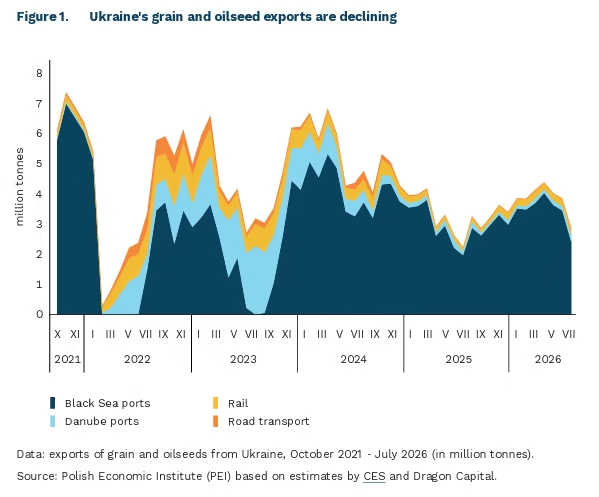
In July and August, attacks on port infrastructure and ships in the Black Sea damaged terminals and halted most grain exports from Russia and Ukraine. According to estimates by the Ukrainian authorities, Russian strikes on ports in Odesa and on the Danube meant that in the period 1-28 August, Ukraine exported 1.6 million tonnes of wheat — about 20% of its potential and around 60% less wheat than a year earlier. Meanwhile, Ukrainian drone attacks on the Russian port of Novorossiysk caused — according to estimates by SovEcon analysts — a 56% y/y decline in Russian wheat exports. As a result, in the first month of the season Russian wheat exports totaled 1.6 million tonnes in all, the lowest for this month since the 2017/2018 season.
Ukraine and Russia account for around one-third of global wheat exports, so disruptions to their operations feed through to world prices very quickly. Already in July, FAO Cereal Price Index averaged 113.8 points, up 6.9% compared with a year earlier. In August, amid a worsening situation and concerns about further disruptions to exports via the Black Sea, wheat futures (CBOT Wheat) rose by around 30% y/y to their highest levels in over three years.
Ukraine is seeking alternative export channels. During the blockade of Black Sea ports in 2022 and 2023, the Ukrainian government managed to redirect part of its exports to Danube ports and to Constanța in Romania, and to move part by land to the EU. Currently, low water levels on the Danube and attacks on infrastructure near the border with Moldova mean these ports can replace only a very small share of the lost handling capacity. Ukraine is therefore seeking increased transit through Poland and other countries in the region, along with the lifting of the current embargo on imports of wheat, maize, rapeseed and sunflower seed. Land routes, however, will not allow export volumes to be maintained at the level handled by Black Sea ports. Russia’s export potential has been reduced most by the damage to the port of Novorossiysk, which accounts for a third of Russian grain exports. Russia can only partially redirect its grain exports to other ports (mainly on the Baltic), partly onto land routes, and partly to ports in the EU’s Baltic states. These routes carry higher transport costs and also lengthen delivery times, since the main buyers of Russian wheat are Egypt and Turkey. Maintaining oil exports from Novorossiysk is also a challenge for the Kremlin. Fearing further consequences of Ukrainian attacks on economic targets, the Kremlin has decreed that responsibility for drone protection be shifted onto business owners. Inadequate protection against attacks could become a pretext for state institutions to take over management of private critical infrastructure facilities.
Export problems are compounding the difficulties facing the Ukrainian and Russian economies in the fifth year of the war. According to estimates by Russia’s central bank, Russian GDP grew by 0.6% in H1 2026. Drone attacks and conditions in the oil market mean the latest forecasts point to weaker Russian GDP growth this year than previously expected. For Ukraine, meanwhile, agricultural exports are of key importance, accounting for around 60% of total exports. A prolonged port blockade would cause export losses, currency fluctuations, lower domestic prices for export goods, and the exhaustion of storage capacity. Continuation of the blockade also poses a risk to the 1.8% GDP growth forecast by the National Bank of Ukraine.
Jan Strzelecki
Despite an increase in investment outlays, large and medium-sized companies are not launching new projects
14% y/y increase in investment outlays by non-financial enterprises employing at least 50 people in the first half of 2026
14% y/y decrease in the number of newly started investments in the first half of 2026
60% of medium-sized and large companies reported no investment activity in the first half of 2026w I połowie 2026 r.
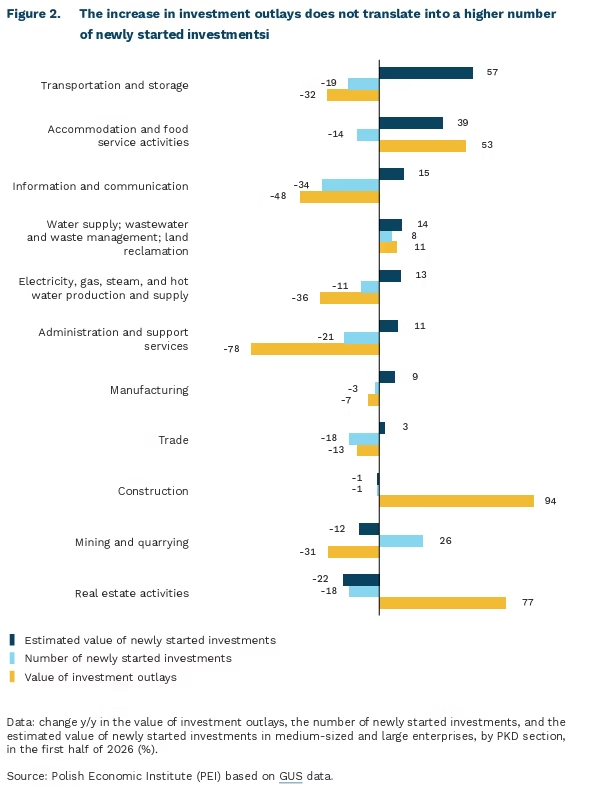
In the first half of 2026, investment outlays by medium and large enterprises [1] amounted to 100.2 billion PLN and were nearly 14% higher than a year earlier, according to data from Statistics Poland (GUS). By comparison, in the corresponding period of 2025, the value of investment outlays declined slightly, by just over 1%. Between January and June 2026, outlays on means of transport recorded the largest y/y increase, at 31%, while outlays on buildings and structures rose to a lesser extent, by 9%. However, investment growth varied significantly across sectors. The largest increases in investment outlays were recorded in transportation and storage (57%) and accommodation and food service activities (39%). In contrast, investment spending declined in three sectors: real estate activities, mining and quarrying, and construction (by 22%, 12%, and 1%, respectively). It is worth noting that both real estate activities and construction recorded an increase in investment outlays in the first half of 2025.
At the same time, the number of newly started investments fell by nearly 14% compared to the same period in 2025. An increase in the number of newly started investments compared with the first half of 2025 was recorded only in mining and quarrying and in the sector comprising water supply, sewerage, waste management and remediation activities (by 26% and 8%, respectively). The largest decline occurred in information and communication, where the number of newly started investments fell by 34% y/y. Smaller but still significant declines were recorded in transportation and storage (by 19%), trade, and real estate activities (18% each). At the same time, the estimated value of newly started investments fell by 20% y/y, although this change varied significantly across sectors. Four sectors recorded an increase in value, with construction seeing a rise of as much as 94%.
A similar picture emerges from Monthly Business Climate Index (MIK) data: in an August survey, 59% of companies employing at least 50 people reported a lack of investment. In the first half of 2026, an average of 60% of the medium-sized and large companies surveyed reported no investment activity (8 percentage points more than in the corresponding period of 2025). This means that investment activity remains limited in terms of the number of companies involved. The limited scale of investment is also evident in the NBP Quick Monitoring survey: growth in investment outlays was stronger in the public sector than in the private sector, while the median investment growth rate for the average firm fell below zero, indicating lower y/y investment outlays in at least half of all companies. This suggests that, despite the increase in total investment outlays, the rise in investment activity was concentrated among certain companies and sectors rather than being widespread. At the same time, in the second quarter of 2026, companies’ short-term investment forecasts improved, with public-sector companies and the largest enterprises showing high levels of optimism. As a barrier holding back investment, entrepreneurs more frequently cited concerns about the economic outlook and demand (46%) than insufficient own funds (26%).
An increase in investment outlays, coupled with a decline in the number and estimated value of newly started investments, may indicate that companies are increasing spending primarily on projects already in progress and are approaching the launch of new projects with caution. This may suggest that the improvement relates more to the scale of spending than to a widespread increase in companies’ investment activity. At the same time, the increase in investment outlays is concentrated in selected sectors and groups of companies, as evidenced by strong growth in spending on transportation equipment, as well as in transportation and storage. The data point to a rebound in investment values following a weaker 2025, but its structure remains uneven, which justifies caution in assessing the durability of the improvement in the coming quarters.
Aleksandra Wejt-Knyżewska
Small companies are not making full use of their growth potential
59% of companies rate their financial situation positively as one that would allow them to grow
35% of companies regularly carry out development investments
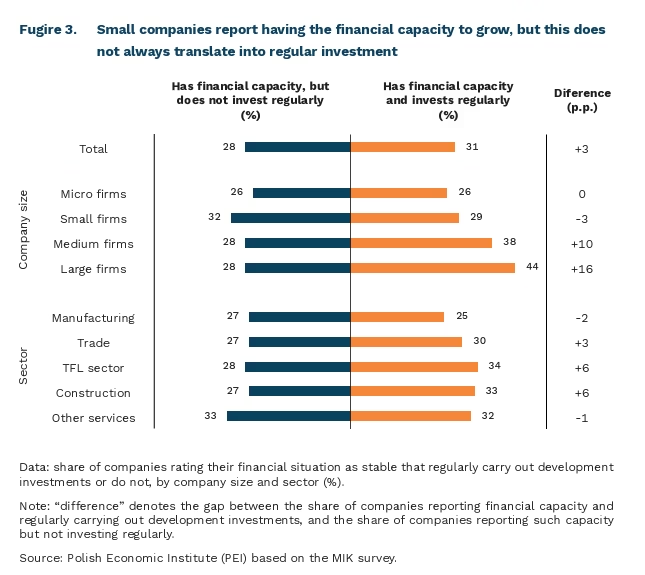
Companies rate their financial stability considerably higher than their investment activity – this is the finding of the June wave of the Monthly Business Climate Index (MIK). Nearly 60% of companies rate their financial situation – the kind that would allow them to grow – positively, while only 35% of surveyed companies report regularly carrying out development investments. Among those surveyed, 28% of companies, despite a good financial situation, do not undertake regular development investments. This is a picture of “stability without growth”, most visible in one particular segment – small companies [2].
Among small companies, 32% report a stable financial situation but do not invest regularly, compared with 29% that, with the same self-assessed financial situation, do invest regularly – this is the only size class in which unused potential outweighs realised potential. The picture is reversed among medium-sized and large companies (38% and 44% respectively invest regularly, while 28% in each group report financial capacity but no regular investment). By sector, unused investment potential is more common in manufacturing (27% versus 25%) and other services (33% versus 32%). In trade, the TFL (transport-forwarding-logistics) sector, and construction, by contrast, a larger share of companies invest regularly.
Small companies prefer to hold on to their financial buffer as a safeguard rather than take on investment risk in an uncertain economic environment. Manufacturing performs poorly because it is a capital-intensive sector with a long investment payback period, further burdened by weak demand and high energy costs. TFL and construction, by contrast, are benefiting from a wave of infrastructure investment financed by the National Recovery Plan (KPO) and EU funds (a record PLN 100 billion earmarked for transport in 2026) and from a logistics boom linked to nearshoring, which gives them predictable demand.
Companies themselves perceive an insufficient level of investment. The picture emerging from the MIK is confirmed by the EIB Investment Survey 2025 (EIBIS). One in five companies in Poland (20%) considers that over the past three years it invested too little to secure the company’s future success. In the EU, 12% of companies gave this answer. The problem is perceived more often by Polish SMEs – 23% of them consider their past investment insufficient, compared with 17% among large companies. According to Eurostat data, in Q1 2026 the investment rate of non-financial corporations in Poland stood at 17.7%, compared with an EU average of 22.6% [3].
Access to funds, however, does not determine whether investment is undertaken. Polish companies face numerous barriers to doing business that shape the conditions for investment decisions. Data from the MIK survey show that companies most often cite high labour costs (60%), economic uncertainty (59%) and energy costs (54%). A good financial position, often treated as a sufficient condition for an investment rebound, does not on its own trigger one – without an impulse prompting companies to make use of the resources they hold, stability may over time turn into stagnation.
2. We discuss the investment behaviour of large and medium-sized companies in our previous piece.
3. The investment rate of non-financial corporations shows the ratio of gross fixed capital formation to companies’ gross value added, i.e. it shows what share of the value created by companies is allocated to investment.
Katarzyna Dębkowska, Magdalena Lesiak
Mortgage lending hits a record, though inflation and refinancing flatter the figure
PLN 14.78 billion was the value of mortgages granted in July 2026
32% the share of refinancing in new housing loans
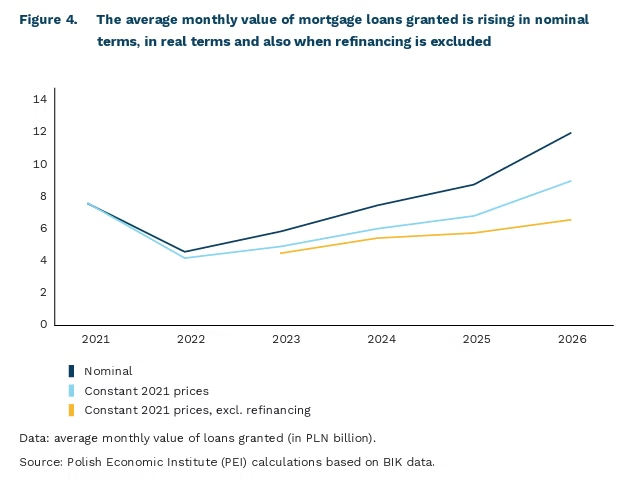
July brought a record on the housing loan market — according to data from the Credit Information Bureau (BIK). The total value of loans granted amounted to PLN 14.78 billion. Compared with July of the previous year, their value rose by 45.3%, and the number of contracts concluded — by 33.1%. The average amount of a housing loan was also at a record level, reaching PLN 487,530, i.e. 9.1% more than in July 2025. In the whole of 2025, housing loans worth PLN 105.90 billion were granted, exceeding the previous record from 2021, which stood at PLN 88.69 billion. In turn, from January to July 2026 their value already reached PLN 88.78 billion, which means an average of PLN 12.68 billion per month, compared with PLN 8.83 billion in 2025.
A nominal record does not mean an equally large increase in real terms. After accounting for inflation, the value of loans granted in 2025, expressed in constant 2021 prices, amounted to PLN 77.42 billion and was therefore lower than in 2021. The average monthly value of loans stood at PLN 6.45 billion in 2025 and PLN 9.05 billion in the first seven months of 2026, compared with PLN 7.39 billion in 2021.
The second factor changing the picture of the market is the growing scale of refinancing. Better lending conditions foster greater interest in mortgages, which is also confirmed by the rising number of contracts concluded. Some of the new loans, however, serve to replace earlier liabilities with new ones taken out on more favourable terms. Refinancing is supported, among other things, by the lower level of interest rates following the cycle of cuts (which we also wrote about HERE). The share of refinancing stood at around 12-13% in 2023-2024, rose to 20% in 2025, and in 2026 reached an average of 32%.
Taking inflation and refinancing into account together further limits the scale of the actual increase in new lending. After both adjustments are applied, the average monthly value of loans granted in 2026 amounted to PLN 6.13 billion, which means that the growth rate of new loans is lower than that observed in 2024 relative to 2023. Nevertheless, the trend remains upward, supported by the improving economic situation and financing conditions.
Further growth in lending is supported by the rising wages of Poles and the stabilisation of housing prices. The average monthly gross wage in the national economy amounted to PLN 8,182 in 2024 and PLN 8,904 in 2025, while in the first half of 2026 it averaged around PLN 9,398. At the same time, the growth of housing prices clearly weakened, and in some cities declines were even recorded. For example, in Warsaw, secondary market prices in Q1 2026 fell by 1.7% y/y (more in the “PEI Economic Weekly” no. 28/2026).
The growing scale of refinancing in response to more favourable lending conditions may indicate more active management of personal finances by Poles. In the case of a mortgage, which is usually the largest liability of a household and the one repaid over the longest period, even a small improvement in terms can bring considerable savings. Borrowers increasingly compare the available offers and are ready to move their liability to another bank if this reduces the cost of servicing it. This increases competition between banks, which must strive not only to attract new customers, but also to retain existing ones.
Jakub Kubiczek
An ageing population will change the structure of consumption in Poland
2.04 percentage points – the estimated increase in the share of household expenditure on healthcare in 2075, compared with 2016, from 6.7% to 8.7%
3.33 percentage points – the estimated decline in the share of household expenditure on food and non-alcoholic drinks in 2075 compared with 2016, from 19.6% to 16.3%
Population ageing is one of the most significant structural challenges facing the Polish economy. Currently, the proportion of people aged 65 and over stands at 21% of the population. According to Eurostat’s forecast, by 2070 the ageing of Polish society will accelerate – the proportion of people aged 65 and over will reach 32.2%. These trends will have a significant impact on the structure of consumer demand: households of different ages have differing spending needs. This means that, as the population ages, the share of different categories of goods and services in the consumption basket of Poles should also change.
These expectations are confirmed by research carried out in Poland. The research suggests that the ageing of Polish society, combined with a moderate rise in incomes, will significantly shift the structure of household consumption. A microsimulation model developed by researchers at the University of Łódź indicates that the largest increase in share is forecast for categories related to housing (+3.2 percentage points, mainly due to energy sources and household equipment, from 25.4% to 28.6%), leisure and culture (+2.2% percentage points, from 5.9% to 8.1%) and health (+2.0 percentage points, from 6.7% to 8.7%) – categories typically associated with older households. At the same time, the share of expenditure in the ‘other’ category (hygiene, insurance, other services) will see the sharpest decline, falling by 4.5 percentage points (from 14.6% to 10.1%), as will that for food and non-alcoholic beverages, down by 3.3 percentage points (from 19.6% to 16.3%). However, this decline may stem from the anticipated rise in income itself rather than from an ageing population (the so-called Engel effect). Transport, alcohol and the sale of tobacco products will each lose around 1 percentage point of their share [4] .
Research carried out in other countries confirms that an ageing population goes hand in hand with an increase in spending on services and a decrease in spending on consumer goods. The services most frequently used by older people are healthcare services, domestic help and media-related services, whilst younger people incur significant expenditure on the purchase of vehicles and petrol. A similar decline is seen in expenditure on education and on clothing and footwear — costs associated with the consumption of services and goods in these categories are heavily concentrated in younger households, which often have children. Data from a study conducted in the US show that a 1 percentage point increase in the proportion of the population aged 65 and over is associated with an increase in the share of services in consumption of approximately 0.7 percentage points. Meanwhile, the results of a study on European Union countries show that, on the one hand, people aged 50 and over account for over half of healthcare expenditure, whilst, on the other hand, their relative share of education expenditure is low and lies well below their share of the population.
An ageing population may also be a factor influencing the structural transformation of the Polish economy. Since older people spend a larger proportion of their income on services, as the population ages, not only does the share of services in consumer spending increase, but so too does the proportion of people employed in the services sector and the share of services in the value added of the economy as a whole. This means that an ageing population will drive structural changes in the Polish economy, namely a shift in employment and in the value added generated in the economy from the manufacturing sector to the services sector.
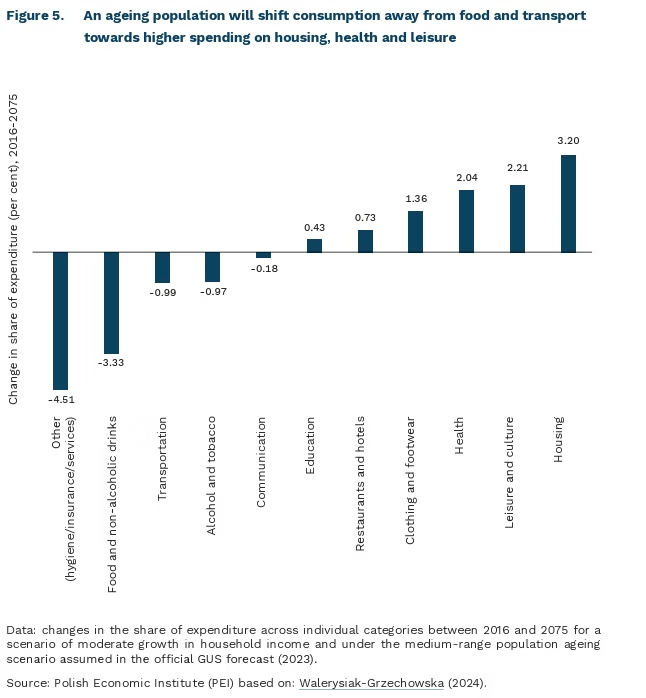
4. We can assume that the changes in the structure of consumer demand will be greater than those presented in the study. This will be due to the fact that the official demographic forecast by the Central Statistical Office (GUS) underestimated the rate at which the Polish population is ageing, as we wrote about HERE.
Paula Kukołowicz
