
Economic Weekly 39/2026, October, 2, 2026
Published: 02/10/2026
Table of contents
Bank of Russia tries to fight inflation by keeping interest rates high
6.3% y/y CPI inflation in Russia in August 2026
14% the Bank of Russia’s key interest rate
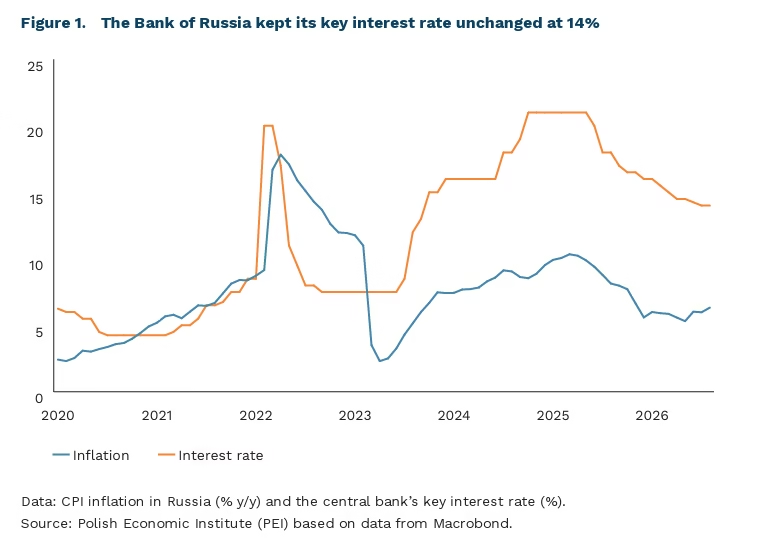
The Russian economy is entering another phase in its fight against inflation. Immediately after the start of the full-scale invasion of Ukraine, the Bank of Russia (CBR) raised its key interest rate from 9.5% to 20% in an attempt to limit the risk of a sharp depreciation of the RUB and a surge in inflation. Inflation reached 17.8% y/y in April 2022. The situation then eased considerably: by April 2023, annual inflation had fallen to 2.3%, although this was largely due to a high base effect. In the following months, however, price pressures began to build again, triggering a new cycle of interest rate hikes. This cycle peaked at 21%, a level maintained from late October 2024 until early June 2025. Since then, the Bank of Russia has gradually eased monetary policy. At its latest meeting, however, the CBR’s Board of Directors kept the key rate unchanged at 14%, in line with market consensus. The Bank forecasts inflation of 6-7% y/y at the end of 2026 and expects it to return to the 4% target in 2027.
Today, the Bank of Russia faces a different problem than in the first weeks of the war. The main issue is no longer financial panic, but a persistent imbalance between demand and the economy’s capacity to expand supply. The labour market remains tight, while fiscal policy continues to provide strong support to demand. At the same time, the economy is facing supply-side constraints and a reduced capacity to increase production. As a result, fiscal and monetary policies are working in opposite directions. The central bank is restraining demand through a high cost of credit, while fiscal policy remains expansionary. The budget deficit is expected to reach 3.2% of GDP this year, compared with an initial target of 1.6%. The CBR has indicated that a stronger fiscal impulse requires a slower pace of interest rate cuts.
Persistent inflationary pressure and weakening economic growth are also visible in the latest data. In August, CPI inflation accelerated to 6.3% y/y, while core inflation rose to 5.4%. The CBR has indicated that the increase in price pressures over the summer was largely related to disruptions at oil refineries, which reduced fuel supply and indirectly affected the inflation basket. At the same time, the Bank lowered its 2026 GDP growth forecast to just 0-1%. This leaves the Bank of Russia facing an increasingly difficult tradeoff: cutting rates too quickly could entrench inflationary pressures, while keeping them high for longer would further weaken demand, investment activity and overall economic activity. High interest rates are therefore intended to cool inflation, but the cost of this policy is also a high financing burden for businesses and households.
Even after inflation returns to target, interest rates may remain relatively high. The Bank of Russia estimates the long-term real neutral interest rate at 3.5-4.5%. With an inflation target of 4%, this corresponds to a nominal interest rate of approximately 7.5-8.5%. The CBR has raised this estimate in recent years, citing, among other factors, a higher risk premium, stronger investment demand and looser fiscal policy. This suggests that the high cost of money is not merely a temporary response to inflation, but is also partly the result of structural changes in the Russian economy. Under its current projections, the Bank of Russia expects the key rate to enter the neutral range only in 2029.
Piotr Kamiński
Egalitarian views on women’s and men’s roles in the labour market prevail in Poland – but not when it comes to childcare
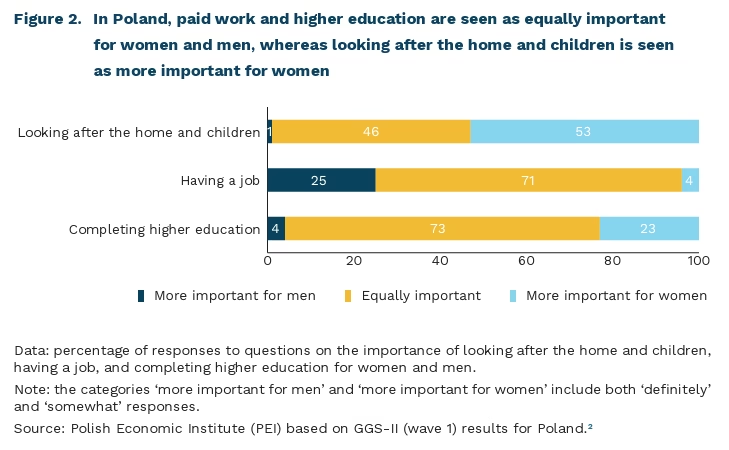
53% of respondents believe that looking after the home and children is more important for women than for men (GGS-II survey, Poland)
71% of respondents believe that having a job is equally important for women and men (GGS-II survey, Poland)
Last week, data were released from the first wave of the international Generations and Gender Survey (GGS-II) in Poland, conducted in late 2025 and early 2026. The survey focuses on three key dimensions: the transformation of families, the social roles of women and men, and intergenerational relationships. The first-wave results provide insight into the current circumstances, plans, attitudes and life experiences of people living in Poland. A second wave, involving the same respondents, is planned by 2028. The survey’s design will make it possible not only to analyse how individuals’ life circumstances change, but also to gain a better understanding of the mechanisms behind these changes.
The GGS-II [1] results are consistent with previous PEI analyses and confirm that the division of household and care responsibilities is clearly gendered. Women more often take care of everyday household chores (laundry, cooking, vacuuming), whereas men are far more likely to carry out occasional minor repairs. Similar differences persist in childcare. Most respondents say they share playing with their child equally, but when it comes to dressing the child or caring for them when they are ill, only around a third report an equal split. In the remaining couples, caring responsibilities are far more often taken on by the woman.
In the sphere of work, attitudes towards the roles of women and men tend to be egalitarian, but in the sphere of care, more traditional beliefs remain strong. Most respondents believe that having a job and completing higher education are equally important for women and men. When it comes to looking after the home and children, however, more than half say this is more important for women.
However, the equal importance attached to having a job does not translate into equal expectations regarding working hours when caring for a young child. Respondents were also asked how many hours per week a mother and a father in a family with a two-yearold child should spend in paid work. A full 40-hour working week was considered appropriate for the father by 87% of respondents, but for the mother by only 40%. Shorter hours were chosen more frequently – for example, 29% of respondents indicated 20 hours per week, and 17% indicated 30 hours.
This pattern of social expectations may be a source of tension for women between family and working life. Especially in a labour market that rewards rigid and long working hours. In practice, combining paid work with greater responsibility for care often requires choosing between the two. From a labour market perspective, this may mean untapped labour potential; from the perspective of family life, it may mean postponing or forgoing motherhood. To mitigate the negative effects of work–family conflict, action is needed on the part of policymakers (e.g. expanding access to formal childcare and strengthening the employment rights of working parents) and employers (e.g. enabling flexible working or part-time work).
- The analysis of the division of household and care responsibilities is one of many topics covered in the report Family, Relationships and Living Conditions in Poland: First Results of the Second Round of the GGP-PL Generations and Gender Survey, which presents the survey’s first results. The report was prepared by several dozen researchers and edited by Prof. M. Mynarska, Prof. I. Kotowska and Prof. E. Gałecka-Burdziak.
- This publication uses data from the Generations and Gender Programme (GGP) (www.ggp-i.org). The programme has received funding from the European Commission, members of its Consortium Board and national funding bodies, which we gratefully acknowledge. Data collection for wave 1 of the survey in Poland is co-funded by the Ministry of Science and Higher Education (agreement no. 2023/WK/10). Information on the survey’s implementation in Poland: https://ggp.sgh.waw.pl/pl.
Iga Rozbicka
Having a child remains a common reason for being out of the labour market
25% of people under the age of 39 in Poland are economically inactive because they are caring for a child or a person with a disability
88% of economically inactive people raising children in Poland are women
In Poland, the proportion of people who are economically inactive due to childcare responsibilities is high compared to other EU countries. Eurostat data show that in 2025, one-quarter of people aged 39 and under who were outside the labour force and wanted to work cited caring for children or adults with disabilities as the reason for their labor market status. This is the highest figure among the EU countries for which data are currently available. The EU average during the same period was 11%. At the same time, however, the proportion of respondents in Poland citing caregiving responsibilities as the reason for their economic inactivity has been declining over the years-as recently as 2019, this figure stood at 38%.
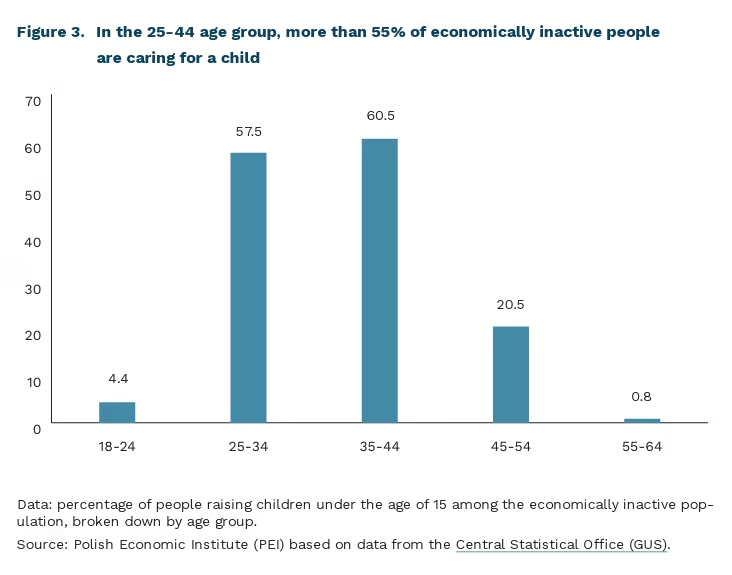
New data from the Central Statistical Office (GUS) show that in 2025, people raising children accounted for 28% of all economically inactive individuals in the 18-44 age group. In 2025, 5.6 million people aged 18-44 were caring for children under 15. Of this group, 4.8 million were employed, and another 116,000 were looking for work. The number of economically inactive individuals stood at 639,000. Childcare was most closely associated with economic inactivity in the 25-34 and 35-44 age groups: in both cases, more than half of those economically inactive were raising children.
Economically inactive individuals who are raising children are primarily women. In 2025, they accounted for 88% of all economically inactive people raising children [3]. Women also predominated among those not in the labor force who regularly care for their grandchildren: in 2025, there were 606,000 such people, of whom 420,000 (69%) were women.
Long working hours are most often cited as an obstacle to balancing childcare and work. According to a GUS survey, 12% of all working parents cite this as a problem. In a similar survey conducted by GUS in the second quarter of 2018, long working hours accounted for 8.7% of responses-slightly more than 3 percentage points less. Other obstacles mentioned include demanding or exhausting work, as well as unpredictable and inconvenient work schedules. At the same time, the proportion of respondents reporting no difficulties in balancing work and childcare has decreased: in 2025, this percentage stood at 63%, compared to 68.4% eight years earlier. However, more than half of working parents still do not report work-related barriers that prevent them from balancing their responsibilities. On the other hand, the data show a low level of flexibility in employment arrangements: 84% of working parents did not have the option to decide when to start and end their workday in 2025.
In Poland, the percentage of people who have switched to part-time work to care for children is lower than the EU average. In 2025, 9% of part-time workers indicated that the reason they work part-time is to care for children or a person with a disability. This is the sixth-lowest figure in the EU, with the EU average standing at 21%. Traditionally, the Netherlands and Austria have the highest shares of part-time workers due to caregiving responsibilities, with this rate exceeding 30%. In countries in our region – Hungary, Slovakia, and the Czech Republic – this share was in the low double digits.
The issue of women’s reduced labor force participation following childbirth has been widely discussed in the literature for quite some time. As early as 2022, the Polish Economic Institute published two reports on the work-related challenges faced by parents and the barriers to mothers’ return to the labor market. Women who have given birth generally want to return to work, yet we know that motherhood permanently reduces their labor force participation. Typically, the break from work following childbirth lasts at least one year. Some women, however, permanently withdraw from the labor force. Although it is difficult to speak of a single universal set of solutions tailored to all employers and working parents, the return to the workforce can be facilitated by, among other things, introducing flexible work hours, promoting part-time work, organizing training and programs to ease the transition back to work, and providing institutional child care.
Jędrzej Lubasiński
It is not AI that is currently changing the situation for young workers in Europe
in 2022 the European labor market reached the peak of its post-pandemic recovery
by 12.5% youth unemployment rose as a result of the COVID-19 pandemic
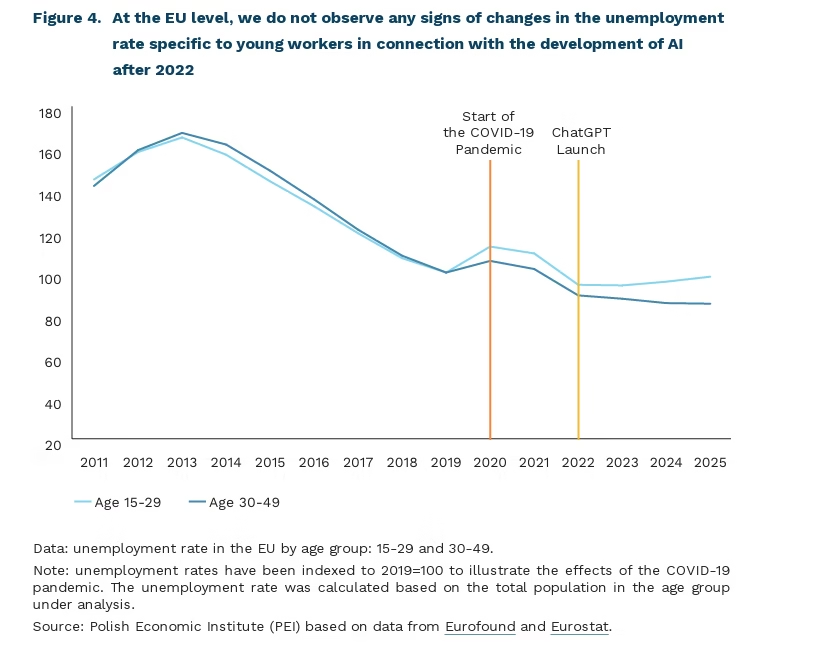
Since the acceleration in the development of artificial intelligence (AI), beginning with the launch of ChatGPT in 2022, there have been widespread concerns about the future of the labor market. Evidence from the United States indicates that AI has a greater impact on the youngest workers, who hold entry-level positions – the ones most easily automated. However, a new analysis published by Eurofound suggests that we cannot easily apply a similar explanation for changes in employment to the European labor market.
Following a strong post-pandemic rebound in European labor markets, which peaked in 2022, we are now seeing a correction in employment. However, the slowdown in European labor markets is affecting both young workers (aged 15-29) and those in their prime working years (30-49) to a comparable degree. It is worth noting, however, that young workers are more vulnerable to market changes, partly due to their limited experience or lack of a secure position, which means that fluctuations in the unemployment rate may be more pronounced in their case.
Noteworthy is the persistent divergence in trends between young workers and middle-aged workers, which has been widening since 2022. In 2025, the unemployment rate in the EU for both groups was below the 2019 level, but the improvement was more pronounced among older workers. The pandemic hit youth unemployment harder (a 12.5% increase compared to 5.6% for the 30-49 age group), and the resulting gap has not yet been closed and continues to widen.
Employment in both age groups across the EU is growing in industries where AI is currently used [4], but this trend began before 2022. Between 2019 and 2025, employment among young people in occupations with high AI usage increased by 16.4%, and among middle-aged workers by 15%. At the same time, occupations currently classified as having low AI usage lost ground – their share of youth employment fell by 7.2%, and among workers in their prime working years, by 11.4%. Employment for both age groups in occupations with moderate AI use remained relatively stable – it increased by 1.2% among young workers and decreased by 4.4% among workers aged 30-49.
When analyzing data on new hires from 2011 to 2025, we observe a shift in the market toward occupations that we currently associate with greater use of AI. The share of new hires in occupations with high AI usage rose among young people from 23.1% to 30.3% during the period under review [5], while among workers aged 30-49, it rose from 25.8% to 34.8%. At the same time, over the same period, we observe a downward trend in employment in occupations with low AI usage in both age groups.
EU-wide data do not allow for a clear attribution of changes in the labor market for young workers to generative artificial intelligence or the shift toward a partially remote work model. A significant portion of the fluctuations in employment observed after 2022 can likely be attributed to the consequences of the COVID-19 pandemic and the extraordinary job creation that followed. However, we are observing a progressive shift in the labor market structure toward occupations with greater potential for AI utilization, a trend that began long before the COVID-19 pandemic or the launch of ChatGPT. However, it cannot be ruled out that, as young workers’ exposure to AI-intensive occupations increases, we will see AI-related changes in youth employment in the EU in the future, similar to what is currently happening in the U.S.
4. Occupations were divided into AI application groups by ranking them according to the AIM-WORK JRC results. The occupations were divided into three groups with roughly equal numbers of employees, based on pre-2022 employment data, so that each group comprises about one-third of all employees, rather than one-third of all occupations.
5. The total number of new hires in the age group under study was calculated as the proportion of employees hired in a given year for occupations with high, medium, and low AI usage.
Jakub Witczak
Transmission grid investment is one of the most urgent expenditures of the global energy transition
25 million km of lines need to be built or modernised by 2035 – according to IEA estimates
EUR 584 billion is what the European Commission’s Grid Action Plan identifies as the investment necessary for grids by 2030
PLN 61 billion in support has been awarded for grid construction and modernisation under the Energy Support Fund, part of Poland’s National Recovery Plan (KPO)
According to estimates by the International Energy Agency (IEA), electricity demand grew twice as fast as overall energy demand over the past decade. Rising electrification means 25 million km of lines will need to be replaced or built (a 30% increase in capacity) by 2035, of which 75% falls on developing countries and 25% on advanced economies.
The European Commission has also identified transmission grids as a bottleneck for the transition. As stated in Grid Action Plan adopted in November 2023, 40% of the EU’s grids are over 40 years old. Modernising and building new grids (including cross-border interconnections) has been valued at EUR 584 billion by 2030.
Clear needs in this area are also underscored by individual announcements from transmission and distribution operators in EU member states. Italy’s Terna is planning EUR 25 billion in investment by 2035. Sweden’s Svenska kraftnät, in its 2026-2035 grid development plan, points to around EUR 21 billion (SEK 225 billion); France’s RTE has announced EUR 40 billion in spending on this purpose by 2040; and Germany’s Federal Network Agency EUR 110 billion for 2024-2033, with a further EUR 320 billion by 2045 [6].
Similar trends are visible outside the European Union as well. State Grid Corporation of China – the country’s largest operator – has announced it will invest USD 574 billion in distribution and transmission grids by 2030 (a 40% increase compared with 2021-2025). In the case of the United States, estimates are less uniform given how fragmented the operator landscape is – for instance, projections based on the Princeton Net-Zero America [7] high-electrification scenario point to as much as USD 2.4-3.7 trillion by 2050.
6. Estimates from the Hans Böckler Foundation, meanwhile, point to as much as EUR 650 billion by 2045.
7. A project run by Princeton University.
Adam Juszczak
Brazil’s presidential election outcome to shape the country’s economic trajectory
1st place for Brazil among destinations of Chinese outbound foreign direct investment in 2025
11% of total Chinese FDI flowed to Brazil in 2025
82.5% of GDP was Brazil’s public debt in July 2026
On the eve of the presidential election, the current macroeconomic situation is the leading concern among Brazilian public opinion. 45% of Brazilians believe that the state of the economy has worsened over the past six months. Brazil’s economic growth has slowed markedly (from 2.4% in 2025 to an OECD-forecast 1.7% in 2026), driven mainly by weakening domestic demand. Inflation, which has hovered around the upper bound of the target (4.5%) for roughly two years, has been countered with a restrictive monetary policy (the central bank’s policy rate currently stands at 13.75%, having been held at 15% from June 2025 to January 2026). This has translated into a broader cooling of the economy. Also concerning is the level of public debt, which reached 82.5% of GDP in July 2026.
For many years, Brazil’s strongest economic ties have been with Beijing. Since 2009, China has been Brazil’s leading trading partner, steadily expanding its share of the Brazilian market at the expense of the US, the EU and Argentina. In 2025, this share reached 27%, twice that of the United States. In H1 2026, the total value of exports to China rose by 22% y/y, driven in part by increased oil shipments, which served as an alternative amid disrupted imports through the Strait of Hormuz. In 2025, Brazil was also the largest recipient of Chinese outbound direct investment worldwide – FDI inflows reached US$6.1 billion, equivalent to roughly 11% of total Chinese outbound FDI.
At the same time, Brazil’s economic relations with other foreign partners are facing headwinds. Friction is evident in relations with the European Union. On 3 September, the EU banned imports of a range of Brazilian products, including beef, pork and poultry, after Brazil failed to provide guarantees of compliance with EU requirements. The United States, meanwhile, seeking to influence Brasília’s policy, imposed two separate tariffs over the summer that now combine to a total of 37.5% (though due to numerous exemptions, this affects only 17% of Brazilian exports to the US).
The outcome of the general elections – including the presidential race – to be held in Brazil on 4 October will determine the direction South America’s largest economy takes going forward. A poll conducted 22-23 September points to a close race between two candidates who sharply polarize the electorate – Luiz Inácio Lula da Silva (40%) and Flávio Bolsonaro (36%). Lula remaining in power would not spare him from having to address Brazil’s existing fiscal difficulties, but would see economic ties with China strengthened and the pursuit of independence from the US continue. A win for Flávio Bolsonaro would mark a reversal of this course [8] and a stronger shift of the economy toward a liberal, Argentina-inspired model. Fiscal balance is the cornerstone of Bolsonaro’s platform, which envisions, among other things, cuts to budget spending, the elimination of ten ministries, tax reductions and the privatization of state-owned companies. Economic relations with China, by contrast, would be weakened in favor of the US.
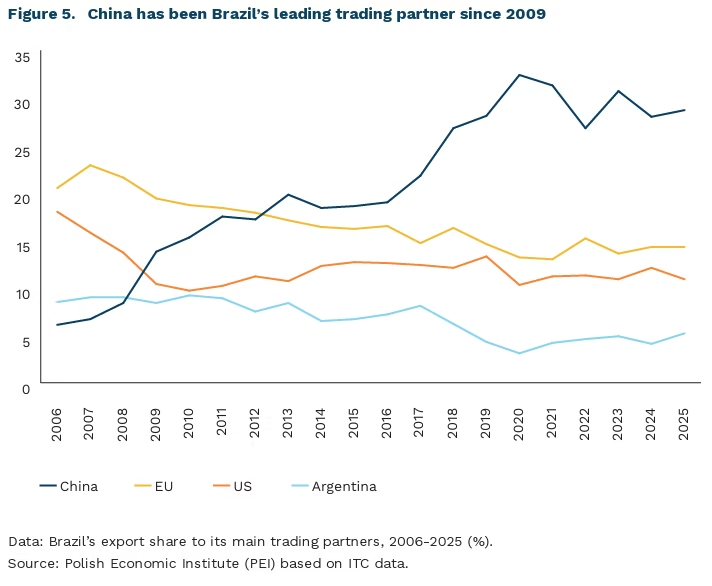
8. The rise in the share of exports to China during Jair Bolsonaro’s term (father of Flávio Bolsonaro), i.e. in 2019-2022, was linked to the pandemic-driven decline in demand from Brazil’s other trading partners. Jair Bolsonaro’s policy was built on maintaining an ideological distance from China, and a similar approach is expected should Flávio Bolsonaro become president.
Katarzyna Sierocińska
