
Economic Weekly 29/2026, July 24, 2026
Published: 24/07/2026
Table of contents
Non-compete clauses may hinder wage growth and reduce productivity
nearly 4 percentiles lower in the wage distribution rank workers without higher education after a 25-year career if they were previously bound by a non-compete clause
by 1.9 percentage points, aggregate productivity declines when the share of employees covered by non-competes increases by 10 percentage points
approximately 27% of employees in Poland are likely bound by a non-compete clause
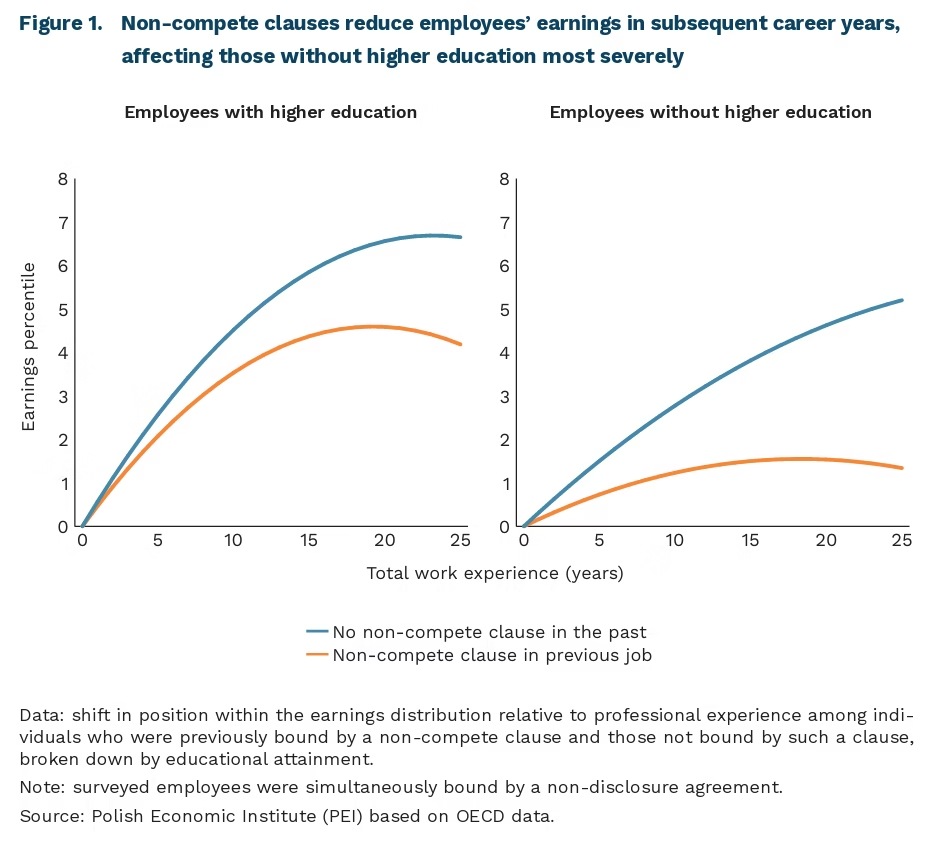
Non-compete clauses can restrict workers’ job mobility and their long-term earnings prospects. Although theoretically intended to protect companies’ strategic interests, today they are frequently applied to employees in lower-level positions without access to sensitive knowledge, effectively becoming a tool that hinders employment flexibility and professional development. A new OECD study indicates that non-competes prevented about 20% of those bound by such agreements from changing jobs, and blocked another 10% from starting their own businesses. Signing such a clause also permanently reduces employees’ earning potential. A comparative wage analysis reveals that individuals who have signed a non-compete agreement in the past earn less throughout their professional careers, and their wages exhibit noticeably slower growth (the study was conducted among individuals subject to a non-disclosure agreement). This effect is particularly pronounced among workers without higher education, who – as a result of signing a non-compete clause – find themselves approximately 4 percentiles lower in the wage distribution after 25 years of their professional careers compared to employees not bound by such restrictions. For employees with higher education, this difference amounts to approximately 2.5 percentiles over the same period.
The growing prevalence of non-compete clauses may also reduce labor productivity, primarily by obstructing the flow of knowledge between companies. OECD analysis indicates that a 10 percentage point increase in the share of employees subject to non-compete clauses is associated with a 1.9 percentage point decline in aggregate productivity. Most of this loss (1.6 percentage points) stems from constrained know-how transfers, which makes it harder for weaker firms to catch up with market leaders. The remaining 0.3 percentage points are due to inefficient labor allocation, which prevents workers from moving to companies that would utilize their skills more efficiently. Importantly, the negative impact of non-compete clauses on labor productivity is stronger in countries with less stringent regulations governing their application and enforcement. This suggests that introducing more precise legal provisions can effectively mitigate the macroeconomic losses caused by such clauses and agreements, even if it does not entirely neutralize them.
In Poland, presumably every fourth employee is subject to a non-compete clause, yet the majority of these agreements may not meet legal requirements. According to employee declarations, about 27% of them are bound by a non-compete clause with their employer. However, the legal quality of these obligations remains a key systemic challenge. It is estimated that approximately 60% of the non-competes in force in Poland are defective and do not meet the requirements necessary for their effective enforcement in court. Nonetheless, non-binding contractual provisions can still discourage employees from changing jobs – a significant proportion of them, fearing the consequences and costs of a potential dispute, still reject competing job offers. Among the employees surveyed by the OECD, nearly half of those whose non-compete clauses would be unlikely to be upheld by a court would still prefer not to violate the terms of their contract.
Mitigating the negative effects of non-compete clauses therefore requires not only legislative improvements but also systemic efforts to raise employees’ legal awareness. These initiatives should be directed primarily towards lower-level employees, for whom the use of such clauses is frequently unwarranted.
Karolina Rutkowska
Working life expectancy in Poland has increased in recent years
36 years is how long a person who turned 15 in Poland in 2025 will remain active in the labor market
3.3 years is how much the duration of working life in Poland lengthened between 2015 and 2025
64.7 years is how long a person born in Poland in 2024 is expected to live in good health
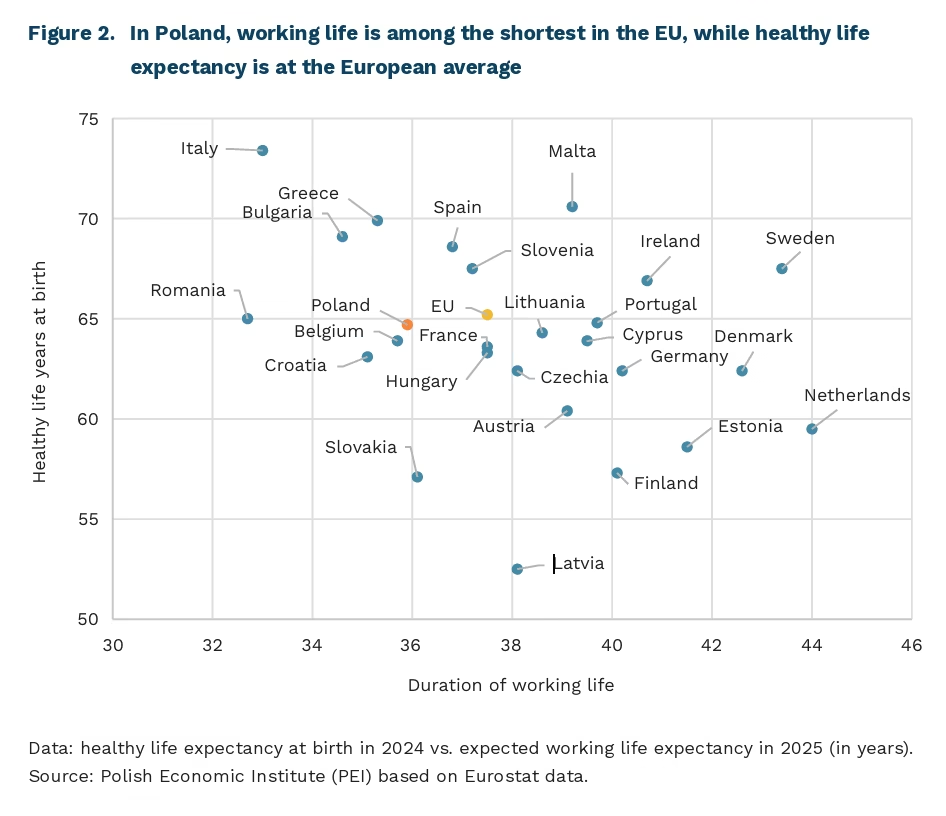
The expected number of years that a Polish resident will spend working or looking for work is among the lowest in the entire EU. According to Eurostat data, in 2025, a person who turns 15 in Poland will be in the labor market for 36 years. This is the seventh-lowest figure in the entire European Union, where the average is 37.5 years. In terms of expected working life, Poland ranks ahead of only Romania, Italy, Bulgaria, Greece, Croatia, Belgium, and Luxembourg. Across the EU, this figure exceeds 40 years in as many as seven countries. These include the Scandinavian countries, Germany, and the Netherlands.
Extending the period during which people remain in the labor market is one way to mitigate the problems resulting from an aging population. This process is already underway in Poland – over the past 10 years, the expected number of years spent in the labor market has increased by 3.3 years. This means that a person who turns 15 in 2025 will, on average, remain in the labor market for more than 3 years longer than a person who turned 15 in 2015. Compared to the EU average, this represents an increase of just over half a year (the EU-wide figure rose by 2.7 years between 2015 and 2025). The countries where the length of time people remain in the labor market has increased the most over the past decade include Hungary (nearly 5 years longer in 2025 than in 2015) and the Netherlands (4 years longer).
A longer working life in Poland may be supported by an increase in the number of healthy life years. A person born in 2024 will, on average, have nearly 65 years of life ahead of them without serious or moderate health problems. Importantly, this indicator is calculated by Eurostat based on mortality data and subjective self-assessments of health status from the EU-SILC survey. The EU average in this regard is half a year higher (64.7 in Poland vs. 65.2 in the EU). Since 2015, healthy life expectancy at birth has increased by 2.4 years in Poland. For women, this increase was significantly higher – 6 years. In 2024, women in Poland could expect to live a longer healthy life than the EU average at the time of their birth.
However, the example of EU countries shows that simply living a long life in good health does not necessarily mean staying in the labor market longer. This is evident in the case of Southern European countries (Italy, Greece, Spain, and Bulgaria), whose residents, despite living relatively long lives in good health, remain in the labor market for a shorter period than the EU average. On the other hand, we can point to the examples of Germany, the Netherlands, and Finland, which, despite having a lower healthy life expectancy, still exceed the 40-year threshold when it comes to the length of time their citizens remain in the labor market.
Institutional factors are also important for further extending the duration of participation in the labor market. This is not solely about the pension system, but also, for example, about flexible forms of employment for older workers. Austria serves as an example here, where the share of people aged 55-64 working part-time was 32%, compared to 8% in Poland. At the same time, with a retirement age similar to Poland’s and a lower life expectancy in subjectively good health, it has a labor market participation rate that is 3 years higher.
Jędrzej Lubasiński
Behavioral insights could help increase physical activity among Poles
56% of Poles reported no physical or recreational activity in 2025 – according to Statistics Poland (GUS)
21% of Poles aged 15 and over met WHO recommendations for leisure-time physical activity (excluding walking) in 2025 – according to data from the Ministry of Sport and Tourism
Regardless of the definition used or the data source, physical activity levels among Poles remain low. According to Statistics Poland (GUS), more than half (56%) of Poles reported that they did not engage in any physical or recreational activity in 2025, as we noted in one of the recent editions of the “PEI Economic Weekly”. Meanwhile, WHO estimates that 37% of adults in Poland had insufficient levels of physical activity in 2022, compared with 25% in the WHO European Region [1]. Low levels of physical activity are also confirmed by data from the Ministry of Sport and Tourism (MSiT): in 2025, only around one in five (21%) people aged 15 and over met WHO recommendations for leisure-time physical activity, excluding walking.
Low levels of physical activity not only have negative consequences for health and quality of life, but also generate significant social and economic costs. According to a 2025 study by the Institute for Structural Research (IBS), if half of physically inactive [2] Poles began meeting WHO recommendations, the number of deaths could fall by 13.7%, while savings from reduced sickness absence could reach PLN 1.9 billion.
Public policy aimed at promoting physical activity should make use of diverse and easily accessible measures. The OECD (2023) highlights, among other things, the importance of programmes implemented in schools, workplaces and healthcare settings; the development of sports and recreational infrastructure; urban planning and transport policies that encourage physical activity; as well as information and educational campaigns. Many such measures are already being implemented in Poland, including initiatives of the Ministry of Sport and Tourism, such as “Active School“ (“Aktywna Szkoła“), “Active Orlik“ (“Aktywny Orlik“), and programmes supporting physical activity among specific groups, including older people, people with disabilities and rural residents. Public bike-sharing systems operating in many Polish cities provide a good example of local initiatives.
Behavioural science has been used in UK public policy for years, including in the health sector, helping to develop innovative approaches that complement traditional policy instruments. The latest initiative aims to encourage people to walk for 30 minutes every day – equivalent to covering a marathon distance over the course of a month. The goal is simple, free and accessible, and the activity requires no specialised equipment or infrastructure. The programme will also use gamification – game-like elements such as tracking progress, reaching milestones, maintaining activity streaks and earning rewards – to increase motivation and help people maintain a healthy habit.
Such innovative, low-cost and widely accessible approaches informed by behavioural insights could complement existing policies in Poland aimed at increasing physical activity. Although such approaches are not yet widely used, the “Bicycle May” (“Rowerowy Maj”) campaign, organised by the City of Gdańsk and also implemented by other local governments, shows that behavioural insights can work in the Polish context. Through play, competition and a reward system, the programme encourages children, young people and teachers to travel to school using active modes of transport. Using similar mechanisms as part of broader public policy could help promote healthy lifestyles among the wider population and encourage people to engage in simple, accessible forms of physical activity – benefiting both individual health and society as a whole.
- The uncertainty interval for the estimate was 28.9-45.4% for Poland and 22.2-28.2% for the WHO European Region. The indicator shows the estimated age-standardised (and therefore comparable across countries) share of adults who do not meet the general physical activity recommendations – at least 150 minutes of moderate-intensity or 75 minutes of vigorous-intensity physical activity per week. The WHO European Region is one of the WHO’s six global regions, comprising 53 member states, and does not fully correspond to the geographical boundaries of Europe.
- At least 150 minutes of moderate-intensity or 75 minutes of vigorous-intensity physical activity per week during leisure time, excluding walking.
Iga Rozbicka
The European Commission identifies digital skills and the digitalisation of SMEs as key areas for improvement in Poland
EUR 8.04 billion the estimated total economic impact of funds from the National Recovery Plan (KPO) earmarked for digitalisation in Poland
50.4% of Poles possess at least basic digital skills
9% share of EU companies in the semiconductor production chain, whilst the target for 2030 is 20%
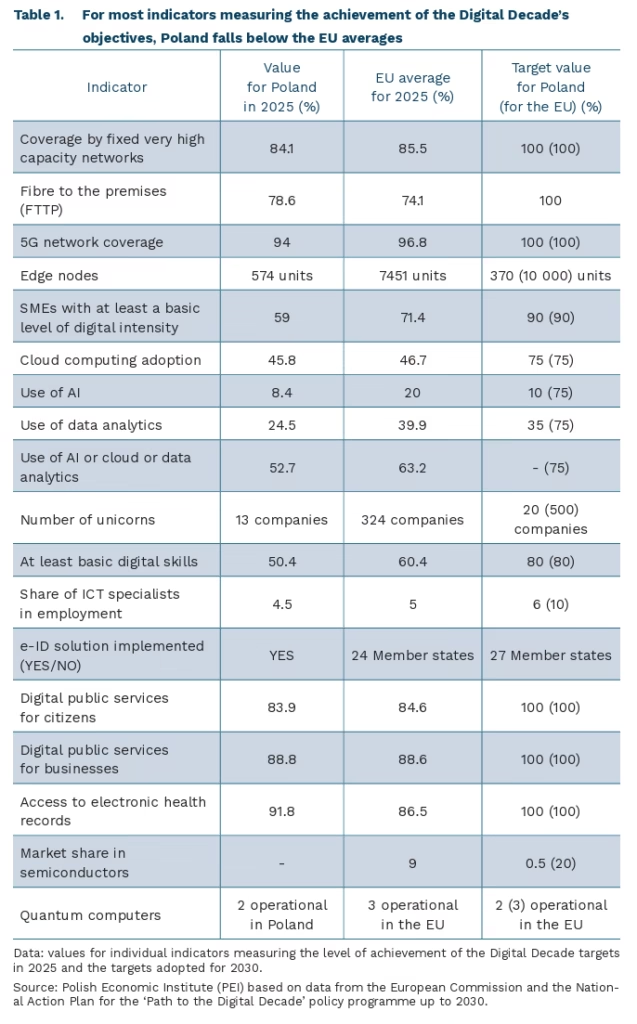
Improving basic digital skills and accelerating the digitalisation of small and medium-sized enterprises are the two most important recommendations made to Poland by the European Commission. In both these indicators, Poland’s results deviate from the EU average – 50.4% of Poles possess at least basic digital skills, compared with an EU average of 60.4%. Among SMEs, 59% of Polish businesses have achieved at least a basic level of digital intensity, compared with 71.4% of European businesses. At the same time, Poland has made a significant contribution to achieving the EU’s digital objectives through the launch of two quantum computers. As part of its annual review of the Digital Decade, the European Commission also presented the progress made towards the targets and recommendations for all EU Member States.
Across the EU as a whole, the best prospects for achieving the set targets lie in 5G network coverage, the digitisation of health information, edge computing and the digitisation of SMEs. However, in the case of semiconductor production, digital public administration services and the number of IT specialists, at the current rate of change, the targets will not be met until after 2050. The Commission points out that, as funding from the Recovery and Resilience Facility (RRF, known as the National Recovery Plan in Poland) comes to an end, the financial impetus for further digitalisation in Europe will weaken. The nearly EUR 150 billion allocated to digitalisation under the RRF (in Poland, approximately EUR 7.25 billion) not only contributed to an improvement in digital indicators but also generated positive externalities. The total economic impact of utilising these funds is estimated at around EUR 219 billion in the EU and EUR 8.04 billion in Poland.
However, the indicators analysed in the report are gradually taking on a historical character – next year, the Commission is set to propose a revision of the targets and new indicators. The lack of any reference to the issue of technological sovereignty is becoming increasingly striking. The existing indicators, including, for example, the use of digital technologies, the number of ‘unicorns’ or even, to some extent, digital skills, reward the consumption of existing solutions (most often supplied by non-European providers). The aspect of sovereignty is only present in the indicators relating to semiconductors and quantum computers. In this regard, changes are to be expected next year, as we also pointed out in the PEI.
Although the new financial framework (2028–2034) is set to provide more funding for digitalisation (excluding the Recovery and Resilience Facility), securing these funds may prove more difficult than before. Some of the funds will be allocated from the centrally managed Competitiveness Fund, whilst those from national envelopes (including cohesion policy) may be conditional upon the implementation of national action plans – in a manner analogous to the National Recovery Plan (KPO).
In order to continue to make effective use of EU funds for digital transformation in Poland, action must be taken in several areas:
- first and foremost, to actively shape future objectives and indicators in line with the country’s strengths (e.g. by ensuring that cybersecurity issues are properly incorporated) – including in cooperation with other countries;
- respond to the recommendations drawn up by the European Commission (regardless of any changes, issues relating to digital skills or the digitalisation of SMEs are unlikely to disappear from the Digital Decade) and monitor their evolution (including a greater emphasis on cybersecurity);
- enhance the capabilities necessary to effectively apply for centrally allocated funds (funds from the Horizon research programmes are the Achilles’ heel here);
- shape the legislation establishing the multiannual financial framework and the interlinking of legal acts in a way that aligns with Poland’s development priorities and strengths (a good example is the proposed Chips Act 2, which takes into account, amongst other things, photonics – a rapidly developing area of Polish specialisation).
Ignacy Święcicki
The US again demands trade concessions from Mexico and Canada
approx. 82% of Mexican and Canadian exports to the US were exempt from additional tariffs in 2025 under the USMCA
approx. 0.27% prices in the US would increase if the USMCA was terminated
The functioning of the North American free trade area established under the US–Mexico–Canada Agreement (USMCA, formerly NAFTA) has once again been called into question. The third round of the USMCA review is taking place in Mexico on 21-23 July, following the US administration’s announcement that it would not extend the agreement under its current terms. Moreover, on the eve of the talks, Donald Trump announced the imposition of 50% tariffs on selected Canadian products, including products from the automotive industry. As part of the review, the United States is seeking to raise the rules-of-origin thresholds in the automotive sector from 75% to 82%, limit the share of Chinese products in North American supply chains and increase the US contribution to 50%, while Mexico and Canada prefer to leave the agreement unchanged. Compliance with the higher US requirements is possible, but would require the introduction of transitional periods. The most likely outcome appears to be an extension of the agreement, albeit with modifications concerning the automotive, steel and aluminium sectors.
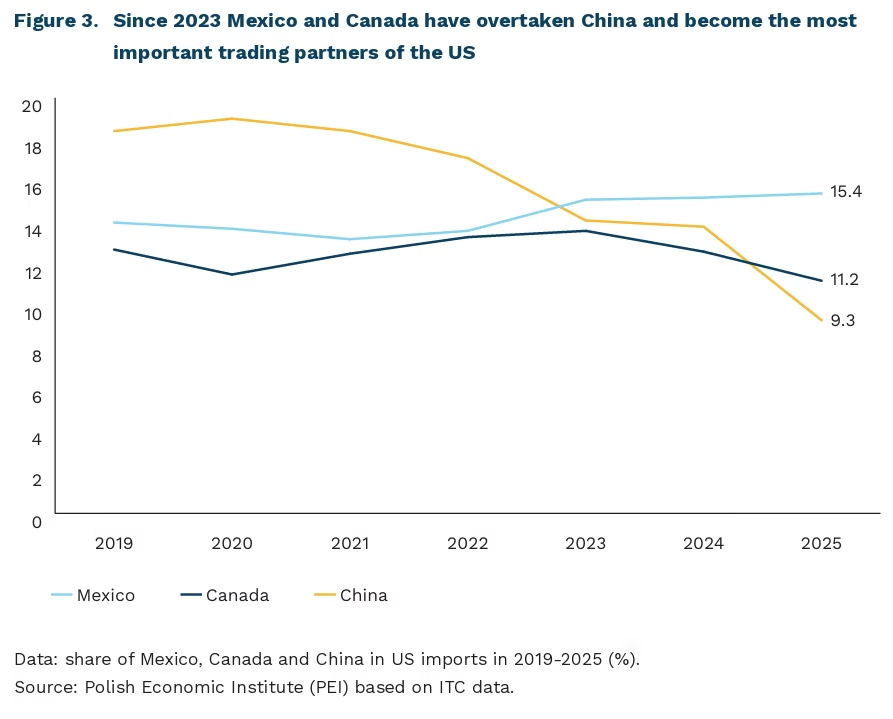
Economically, the agreement is more important for Canada and Mexico, for which the United States accounted for approx. 85% of exports in 2025. Participation in the agreement meant that the tariff increases introduced by Trump during his second term affected these two countries only to a limited extent, while their position became more competitive relative to the rest of the world. Approx. 82% of Mexican and Canadian exports to the United States were exempt from tariffs under the USMCA. The agreement is of less economic importance to the United States, although it remains significant: in 2025, imports from Mexico and Canada accounted for 27% of total US imports. However, according to a 2025 USITC [3] report, the impact of the rules of origin implemented in 2020 on the US economy as a whole was insignificant, with changes in US GDP and employment amounting to less than 0.01%.
At present, the agreement is important to the United States primarily in terms of maintaining the functioning of the market and supply chains. Consequently, terminating the agreement would result only in higher prices: according to PIIE estimates, inflation in the United States would increase by approx. 0.27% under such a scenario. Threats to impose tariffs or terminate the agreement are therefore likely intended to force concessions, primarily from Canada, but also from Mexico. Terminating the agreement would mean not only the end of the tariff preferences established during the NAFTA and USMCA eras, but also the application of new tariffs imposed by the US administration since 2025, including, for example, 25% tariffs in the automotive sector, from which products meeting USMCA requirements have been exempt. This would, of course, result in a decline in imports and investment in North America and would weaken the production capacity of the countries in the region.
Under a scenario in which an agreement is reached on new terms, there is a risk of overregulation. Excessive increases in requirements could ultimately lead some producers to refrain from using USMCA preferences if the necessary regulatory, production and financial adjustments prove too costly. Another possibility is to abandon the trilateral agreement in favour of bilateral agreements. Such an option could create scope for negotiating terms of cooperation that are more favourable to both parties, but its implementation would be time-consuming and administratively costly. Bilateral meetings of this kind already took place between Mexico and Canada in February this year.
From the perspective of Trump’s long-term objective of reducing China’s role in US imports, each of these scenarios entails significant risks. The agreement strengthens the network of regional economic linkages that has been developed over more than thirty years, particularly in the automotive sector. Terminating the agreement could therefore lead to a strengthening of China’s position in the longer term. On the other hand, maintaining the agreement while incorporating additional, more restrictive requirements could discourage some companies from using USMCA preferences, which would also strengthen suppliers from China. Difficult scenario for producers would also be a prolonged absence of a decision on the future of the USMCA, as this would increase business uncertainty, reduce companies’ willingness to invest and, as a result, strengthen China’s position.
3. Within the framework of the USMCA, the USITC (U.S. International Trade Commission) serves in an advisory capacity and analyses the agreement’s impact on the US economy and individual sectors, including the automotive sector.
Katarzyna Sierocińska
Electrification of the EU as a way to avoid high bills for imported oil and gas
at 23% stood in 2024 the electrification rate in the EU – the share of electricity in final energy consumption
46% is set to reach the electrification rate in the EU by 2040, according to the EU’s Electrification Action Plan
2.5 times on average across the EU more expensive electricity is for households (and three times more expensive for industry) than natural gas
The European Commission (EC) has set out a plan for the electrification of the EU economy in light of its ongoing decarbonisation. In its Electrification Action Plan (EAP), published on the 17th of July this year, the European Commission highlights the need to reduce the consumption of imported fossil fuels in favour of increased use of electricity in end-use sectors: electricity generation, district heating, domestic heating, transport and industry.
The electrification rate – the share of electricity in final energy consumption – stood at 23% in the EU in 2024. It has remained at a similar level since the start of the 21st century – in 2001, it stood at 18%. A significant acceleration is therefore needed to achieve the electrification targets set out in the EAP: these targets are 32% by 2030 and 46% by 2040. By way of comparison, the electrification rate in Poland in 2024 stood at 17%, and, according to the assumptions of the National Energy and Climate Plan, Poland will not reach the current EU average until after 2030 (when it is expected to be 20%).
The Electrification Action Plan has identified the barriers hindering the electrification of the EU economy. Among these, it lists: unfavourable electricity-to-natural gas price ratios for households and industry, the high cost of purchasing electricity-based solutions (e.g. heat pumps, electric cars), under-invested electricity grids, a shortage of qualified specialists in the labour market, and the need to strengthen the EU’s production capacity for clean technologies.
The biggest obstacle to the adoption of electrified solutions appears to be the price of electricity for end users. In the document in question, the European Commission emphasises that, on average across the EU, the price of electricity is as much as 2.5 times higher than that of natural gas for households, and as much as three times higher for industry. The EAP assumes that by 2030, the ratio of the price of electricity to that of natural gas will remain at 2.5 for households and fall to 2.0 for industry. This would help to reduce the costs of using clean technologies and, consequently, lead to their wider adoption across the EU, in line with its energy transition objectives.
The Electrification Action Plan sets out the right direction for change in the EU economy, but there are doubts as to whether these changes are likely to be implemented. Achieving the projected rate of electrification, particularly given the modest changes in this indicator over the last quarter of a century in the EU, would require far-reaching changes to certain aspects of the electricity market. Among the main measures proposed by the European Commission, the following stand out: changes to the structure of
Wojciech Żelisko
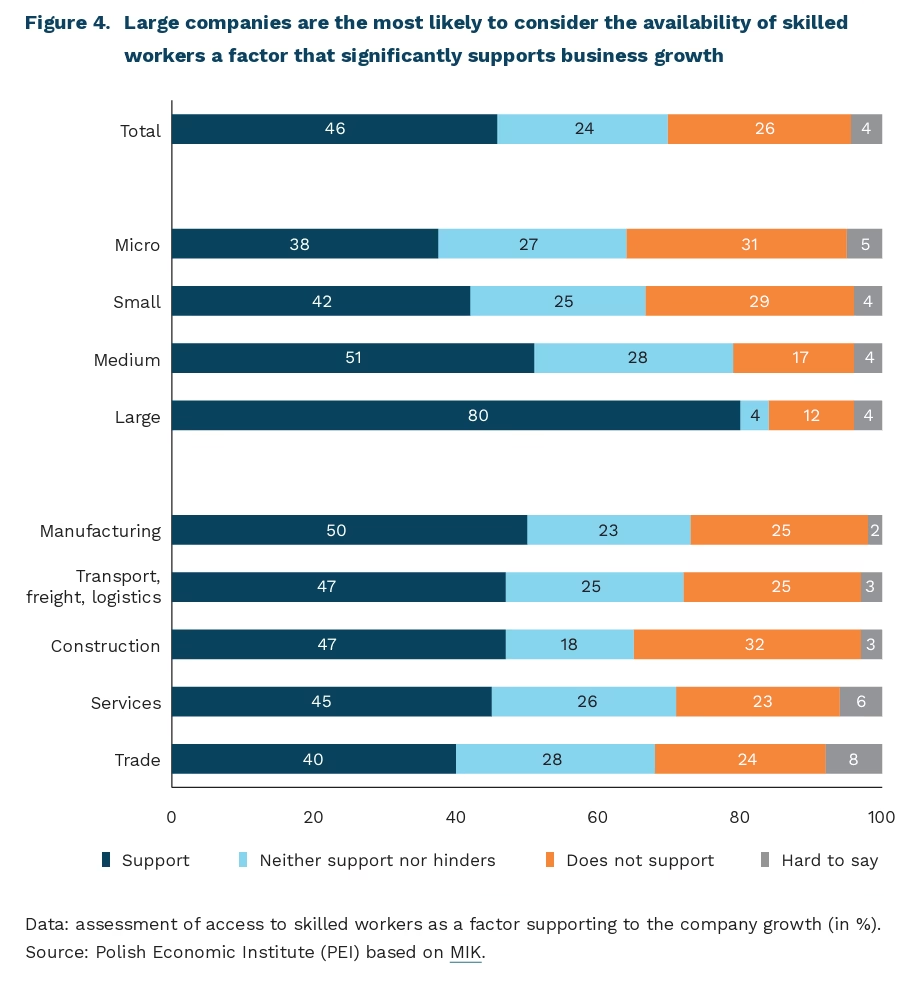
Almost half of companies view the impact of the availability of skilled workers as having a positive impact on their growth
46% of business owners state that the availability of skilled workers supports their company’s growth
58% of companies that regard the availability of skilled workers as a factor in their growth highlight the positive impact of access to technology, knowledge and innovation
59% of companies that regard the availability of skilled staff as a factor in their growth report significant or very significant difficulties linked to staff shortages
Almost half of businesses (46%) believe that the availability of skilled workers supports to their growth, according to a July survey by Monthly Business Climate Index (MIK). Large companies are significantly more likely to highlight this link than micro-enterprises (80% versus 38%). It is worth noting that 31% of micro-enterprises believe that the availability of skilled workers does not support to their growth, whilst only 12% of large companies share this view. At the same time, 28% of the medium-sized enterprises surveyed believe that access to skilled staff neither support nor hinders the company’s growth. The results therefore show a clear variation in assessments depending on company size, but do not allow us to determine whether this is due to a lack of demand for skilled workers or a lack of opportunities to recruit them. The smallest employers are more likely to encounter barriers to staff development, including a lack of time and high costs, according to the latest edition of the Human Capital Report. The reasons for this include, amongst other things, limited resources.
Manufacturing companies most often consider the availability of skilled workers to be a factor that promotes their growth – 50% of respondents cited this, whilst in the retail sector the figure stands at 40%. Nearly one in three construction companies surveyed view this factor negatively. It is also worth noting that, at the end of the first quarter of 2026, the highest number of job vacancies was recorded in the manufacturing sector – 20,500 – primarily for industrial workers and craftspeople, as well as machine operators and fitters, according to data from Statistics Poland. The issue of job vacancies also affected these occupational groups in the construction sector, which points to a high demand for technical staff in both industries.
Companies that recognise that the availability of skilled workers contributes to their growth also highlight the positive impact of access to technology, knowledge and innovation (58%). Among those surveyed who regard access to skilled staff as a factor hindering growth, 36% see a positive impact, whilst 29% see a negative one. This may mean that businesses with suitably qualified staff are better placed to implement technology and make use of knowledge. More than half of those who regard (59%) and those who do not regard (54%) the availability of skilled staff as a factor in development indicate that the unavailability of staff constitutes a major or very major barrier to their business operations. The slight difference between these groups suggests that the problem of labour shortages is felt to a similar extent. At the same time, it should be noted that the availability of skilled staff is an obstacle to investment for 81% of Polish companies, according to EIB data.
Skilled workers represent an opportunity for businesses to grow, yet the challenges involved in recruiting them make it difficult to operate. The importance of staff with the right skills is particularly evident in areas where employees’ skills are essential for, amongst other things, managing complex processes or new technologies. Data from the July MIK survey fits into the broader picture of the labour market, pointing to a high demand for workers. This is borne out by data on the number of job vacancies, investment barriers and research findings highlighting the difficulties employers face in recruiting staff with certain skills.
Aleksandra Wejt-Knyżewska
