Economic Weekly 38/2026, September, 25, 2026
Published: 25/09/2026
Table of contents
EU budget negotiations for 2028-2034 enter the decisive phase
EUR 2 trillion the budget proposed by the European Commission
2% the proposed cut to the Commission’s original draft, put forward by the Cyprus Presidency
15-16 October European Council summit focused on the 2028-2034 EU budget
October will be the most heated month of the EU budget negotiations. Disputes have already broken out as European Council President António Costa finished his round of meetings in European capitals, and at ECOFIN, the meeting of member states’ finance ministers. The Irish Presidency of the Council of the EU will present its proposal in early October, and on 15 October António Costa will take over leadership of the negotiations at the European Council level. About three months remain until the planned deadline for reaching an agreement. Meeting this deadline matters a great deal. If it slips, the budget dispute risks running into election periods in key EU countries (France, Spain, Italy and Poland), which would make a compromise harder to reach.
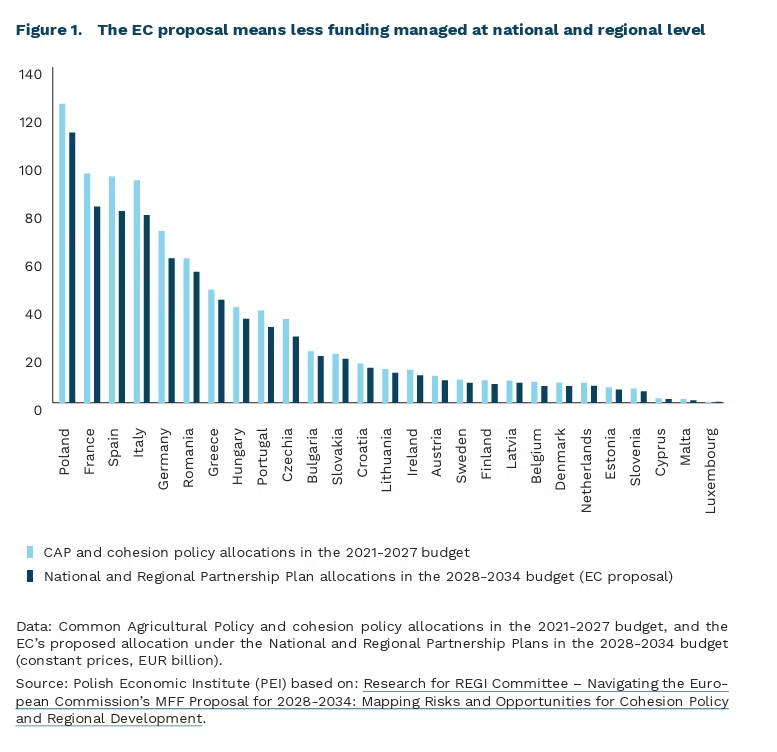
The dispute in the Council of the EU is between the so-called “frugal” countries, which traditionally demand cuts, and the “friends of cohesion” from southern and eastern Europe, who argue for spending that reduces development gaps, strengthens the single market and supports investment in less developed regions. The “frugals” (Germany, Denmark, the Netherlands, Austria, Finland and Sweden) want to cut “several hundred billion euros” from the EUR 2 trillion first proposed by the European Commission (EC). At the same time, their governments want to raise spending on security and economic competitiveness compared with the previous financial framework, and to avoid new joint borrowing. The frugals also propose cutting the costs of the Brussels bureaucracy. They were cool towards Cyprus’s proposal, made in the first half of 2026, to cut the budget by EUR 32 billion. The “friends of cohesion”, including Spain, Italy and Poland, want a budget large enough both to boost economic competitiveness and to keep cohesion policy going. Under the EC proposal, funding in the next budget for the National and Regional Partnership Plans (covering cohesion, agriculture and home affairs) would match the previous framework in nominal terms. In constant prices, that means a 14% smaller allocation. For the first time, cohesion policy and agriculture would make up less than half of the total EU budget.
The EU budget relies mainly on contributions from member states. The European Commission and the European Parliament are also trying to bring in other sources of funding, known as own resources. Besides national contributions, the budget already gets money from a share of VAT revenue and customs duties, among other sources. In 2021, a levy on non-recycled plastic packaging was added. Member states calculate it statistically and pay it into the common budget. Collection under the Carbon Border Adjustment Mechanism (CBAM) will begin in 2027, but revenue will be much lower than was assumed in 2020. The debate on adding more own resources has gone on for years without much progress. European Council President António Costa has tried to win support for new resources, such as a levy on multinational corporations operating in the EU, redirecting ETS revenue, or a tobacco tax. Each of these, however, has met objections from at least one member state. A European Parliament (EP) proposal to tax gains from cryptocurrencies and gambling is also under discussion, though technical issues may get in the way.
Adopting the multiannual financial framework requires the consent of the European Parliament (EP), which favours a bigger budget. The EC’s main aim was to make the budget more flexible and better able to respond to unforeseen events. To that end, it proposed keeping a large reserve within the budget. Parliament is sceptical about leaving part of the funds unallocated when the framework is already modest relative to needs. In its position, the EP accepts that funding for new priorities such as defence and competitiveness must rise, but not at the expense of the Common Agricultural Policy or cohesion policy. It also stresses decarbonising the economy and securing funding for the clean-technology sector. Like the member states, the EP wants to limit the EC’s discretion over competitiveness funding. It proposes that independent experts, rather than the EC, set the objectives. Intensive negotiations between the member states, the Commission and Parliament in the coming months will decide the shape of the EU’s common budget for the years ahead.
Jan Strzelecki, Marek Wąsiński
The European Union is trying to reduce its dependence on semiconductors
9% share of EU-based companies in the global semiconductor market value
10-fold the increase in prices for some raw materials essential for semiconductor production following China’s introduction of export control
The European Union is dependent on semiconductor imports – this assessment is the basis for the European Commission’s (EC) latest initiative to support the sector. The manufacturing of modern chips is one of the most complex production chains in the world. The final product consists of over 1,000 intermediate components, and during production, goods cross national borders more than 70 times. In such a complex ecosystem, there are only a few links where European companies hold a strong position, while all other stages and products originate from other regions of the world.
Only about 9% of the value generated in the semiconductor market is produced in Europe, while imports account for as much as 78% of the value of components and circuits used in the EU. The largest share of supplies comes from Asian countries – Taiwan, South Korea, and China. The scale of dependence on imports may be a problem, but far more significant is the fact that bottlenecks exist at many stages – individual companies producing components that cannot be replaced in the short term. For example, China accounts for over 90% of gallium production and over 80% of germanium production (raw materials essential for the production of integrated circuits, LEDs, and infrared systems); South Korea accounts for 42% of memory card production; and virtually all production of the most advanced semiconductors is located in Taiwan.
Growing geopolitical tensions and increasingly frequent instances of using technological advantage to intimidate trading partners mean that control over the semiconductor supply chain is becoming of critical importance. The U.S. administration may restrict access to intellectual property or end products, while China controls raw materials – exports of gallium and germanium have been subject to restrictions since 2023, and prices for these materials have since risen as much as tenfold. Meanwhile, Europe holds a sufficiently strong position at only one stage of the production chain – the deposition of materials onto silicon wafers. The Dutch companies ASML and ASM operate in this area; the former holds a monopoly on the market for the most advanced EUV lithography machines, which are essential for the mass production of high-end semiconductors, while the latter holds over 50% of the market share for atomic layer deposition (ALD) equipment.
In this context, the European Commission is proposing another initiative aimed at strengthening the European semiconductor manufacturing industry, increasing coordination among member states (including in the monitoring of supply chains), and boosting demand for end products. The Chips Act 2.0, as the proposal is called, was presented in June of this year. Preliminary work is currently underway in the Council of the EU, and preparations are being made in the European Parliament. There is still a long way to go before this initiative is adopted, but growing uncertainty in international relations and increasingly frequent instances of the “weaponization” of trade policy indicate that it is an essential element in building European economic resilience.
Ignacy Święcicki
The European Commission wants to systematically restrict children’s access to dangerous online content
15 years old would be the minimum age for independently creating accounts on social media platforms under the European Commission’s new proposal
up to 6% of social media providers’ global annual turnover could be imposed as a penalty under the Commission’s proposal for failing to comply with rules protecting children who use their services
The European Commission has joined the group of initiatives aimed at restricting minors’ access to dangerous and inappropriate online content. Last week, the Commission published an EU draft regulation on child safety online. The comprehensive nature of the proposal deserves particular attention. It not only introduces age restrictions on legal access to social media and video-sharing platforms, but also actively involves parents and legal guardians in overseeing children’s activity on these platforms. It also imposes a range of obligations on companies providing services such as social media platforms, video-sharing platforms, video games, chatbots, and AI assistants.
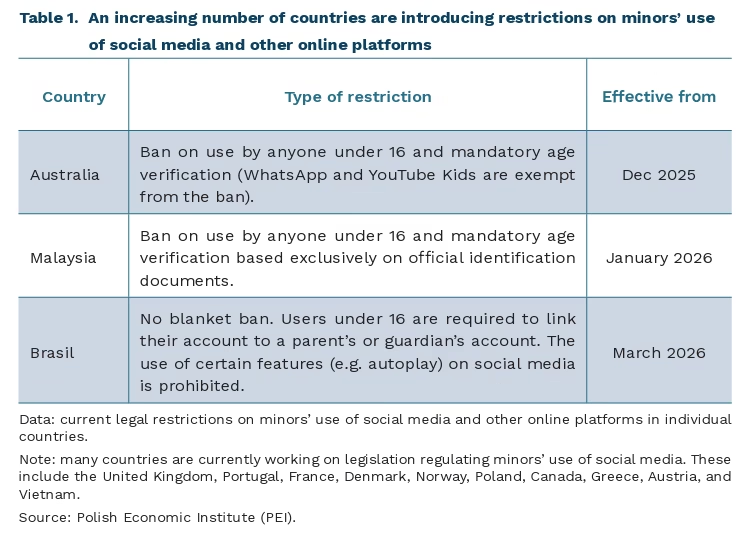
The proposed rules prohibit children under the age of 15 from creating their own accounts on social media platforms. Teenagers aged 13-15 may use accounts created and supervised by their parents or guardians (with limits on number of contacts), while children under 13 may only access child-friendly services through their parents’ or guardians’ accounts. In both cases, the use of these services is limited to one hour per day.
A substantial part of the new regulation concerns the providers of the services listed above and imposes new obligations on them. First, they would be required to verify users’ ages (using a tool from a list approved by the European Commission), rather than relying on users’ declarations. Second, companies would have to ensure children’s safety at the design stage of their services – in particular, they would not be allowed to use addictive algorithms, enable unlimited scrolling of content, or send notifications during nighttime hours. They would also have to restrict the ability of strangers to contact children. Violations could result in fines of up to 6% of global annual turnover. Despite the proposal’s broad scope, examples from existing regulations raise questions about how effective it would be in practice.
The example of Australia illustrates that, despite the ban on social media use by people under the age of 16 that has been in force since December 2025, the ban remained largely ineffective for many months. Not all platforms verified users’ ages, while on others, age verification using facial-recognition tools and scans of photo IDs was circumvented by using other people’s photos and identification documents, including those of parents, sometimes with their consent. As a result, although many accounts belonging to underage users were successfully blocked, a significant proportion of users under 16 continued to use well-known platforms in violation of the law.
An important element of the EU proposals is the active involvement of parents in the system for protecting children. However, simply providing parents with tools for monitoring and control is not enough. It is also essential to raise awareness of why limiting and verifying children’s access to online platforms is so important. Research by NASK shows that Polish parents often reduce their level of monitoring and involvement when their children reach the age of 10-13 – precisely when they are most vulnerable to online risks. Coordination of efforts at the community level is also crucial, as it can reduce social pressure to use digital devices. One example is the UK parental pact initiative Smartphone Free Childhood, which has led in some schools to a dramatic decline in the proportion of children who own their own smartphones and have access to social media.
The solutions contained in the European Commission’s proposal address many of the problems identified by experts as resulting from excessive and uncontrolled use of digital media and services by minors. These include addiction, sleep disturbances, an excessive need for peer approval, lack of physical activity, forming dangerous relationships online, and reduced contact with peers offline. Although the effectiveness of the Commission’s proposal will depend on broader engagement from communities, individual caregivers, and online service providers, the fact that this area is being regulated through specific legal provisions – with the responsibilities of individual actors for children’s online safety explicitly defined – should be regarded as a very important move.
Agnieszka Wincewicz-Price
Firms will respond to the minimum wage increase with price increases, not layoffs
30% of firms declare that they do not employ workers paid the minimum wage
48% of firms affected by the minimum wage increase declare that their response will be to raise the prices of their products or services
20% of firms employing minimumwage workers declare that they will reduce employment
The increase in the minimum wage from January 1, 2027 may translate into higher prices, but probably not into a decline in employment – according to a survey conducted in early September 2026 among 500 enterprises as part of the Monthly Business Climate Index (MIK) survey. The minimum wage will rise by about 3% compared to 2026, to PLN 4,950 gross per month [1].
Nearly one in three surveyed firms (30%) considered that the 2027 minimum wage increase would not affect them. This declaration may stem from the fact that these firms do not employ people whose full-time-equivalent pay equals the minimum wage. Larger firms are considerably more resilient to the minimum wage increase than smaller ones: it does not affect nearly half (48%) of large entities, and one in three SME-sector firms. These results are consistent with GUS data on wages broken down by firm size, which show that median gross pay rises with firm size.
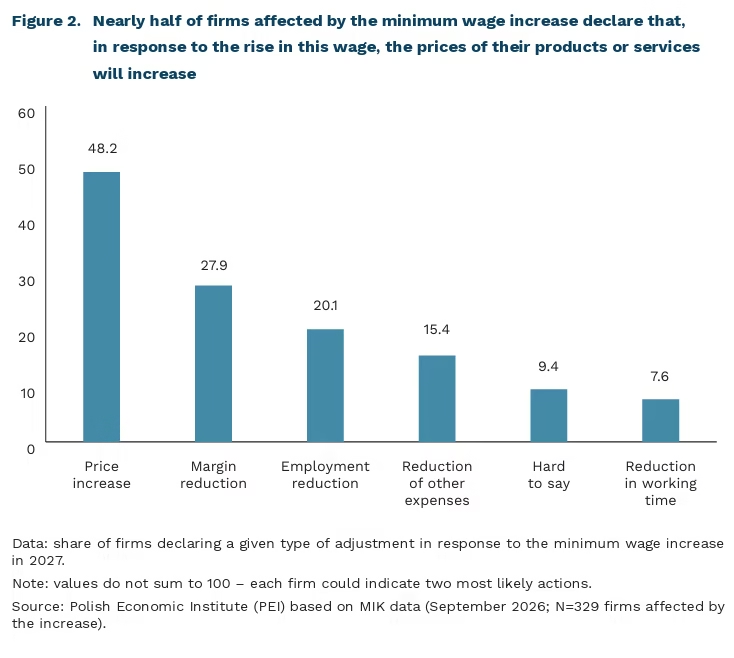
Among firms that employ minimum-wage workers, nearly half (48%) declared that in response to the increase they will raise the prices of their products or services, while 28% believe the increase will reduce their business margin. Only 20% of firms indicated a reduction in employment as the most likely response [2]. The intention to raise prices was reported more often by construction firms (50%) and service firms (42%), while trade and TSL firms plan to do so less often (15% and 22% respectively) and instead more often resort to cutting margins (30% and 23%). The difference between sectors may stem not so much from the scale of cost pressure (the barrier of rising employment costs is rated similarly across all sectors) as from differing ability to pass costs on to prices. Sectors with more individualized, contract-based pricing (construction, services) pass the increase on to customers more easily than sectors with strongly competitive, pre-negotiated prices (trade, TSL), which will more often look for savings on the margin side.
The risk of employment reduction in response to the increase is concentrated in firms in weaker market and financial condition. In our survey, firms recording a month-on-month sales decline exceeding 10% are 2.4 times more likely to declare that they will reduce employment in response to the increase than other firms. Firms that are not investing due to a lack of financial resources are almost twice as likely to reduce employment as other enterprises.
These results are consistent with the conclusions of a report published by PEI: minimum wage increases in 2012-2024 did not lead to a decline in aggregate employment in Polish powiats, even though the ratio of the minimum wage to average wage rose over that period from 40% to 52.4%. The current results do not contradict this finding: the concentration of short-term employment-reduction risk in a narrow group of firms in weak condition is consistent with the absence of a visible effect at the aggregate level. This is not inconsistent with the contemporary empirical literature, which, as we indicate in the report, increasingly finds no employment effects from moderate minimum wage increases.
- The final amounts are set out in the Regulation of the Council of Ministers of 14 September 2026, published in the Journal of Laws of 15 September 2026 under item 1213.
- The companies surveyed were able to select a maximum of two answers to the question asked.
Katarzyna Dębkowska, Paula Kukołowicz
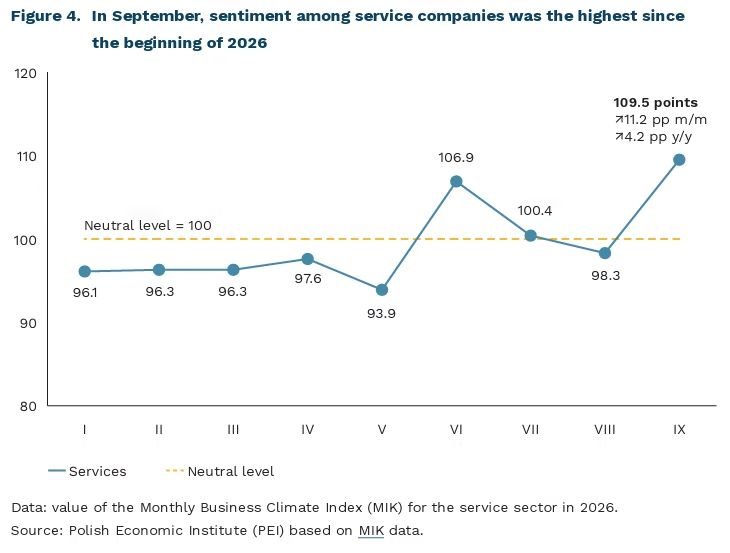
In September, sentiment among service companies improved significantly
49% of service companies invested between June and August 2026
65% of service companies declared in September that they have sufficient funds to operate for more than three months
by 6.3% y/y grew service output in June 2026
In September, sentiment among service companies was better than in other sectors, according to data from the Monthly Business Climate Index (MIK). The MIK index stood at 109.5 points, indicating that positive sentiment outweighed negative sentiment. At the same time, services recorded a significant improvement compared with the previous month (by 11.2 points) and the previous year (by 4.4 points). Several factors determined this positive situation in service companies. Representatives of this sector reported growth in sales value and the number of new orders more frequently than those in other sectors, while less often experiencing a decrease. Consequently, they were less likely than other sectors to plan workforce reductions, and significantly more intend to increase wages.
The service sector declares making investments in tangible and intangible assets over the last three months more frequently than other industries, according to MIK data. In September, as many as 49% of service companies declared investment activity, representing an increase of 11 percentage points compared to the previous month and by far the highest result since the beginning of this year. It is possible that the investment activity of service companies will be maintained in the coming months, as there is a clear dominance of companies with insufficient capacity over those with excess capacity (16% vs. 5%). At the same time, declarations of insufficient capacity in September were the most frequent recorded since the beginning of the year. Another positive sign is the very good liquidity of the service sector – 65% of companies have sufficient funds to operate for more than three months, and a further 19% for 2 to 3 months.
The positive situation in services is confirmed by Statistics Poland (GUS) data. After adjusting for seasonal factors, service output was 6.3% higher than in June 2025 and 1.5% higher compared to May 2026. Meanwhile, according to Eurostat data, service output in Poland grew by 2.8% in Q2 2026 compared to Q1, making it one of the higher results across the entire EU. Statistics Poland’s (GUS) August business climate indicator also points to a good situation in services. The most favourable assessments come from companies involved in financial and insurance activities, with slightly lower ratings from information and communication, as well as accommodation and food service activities.
The situation in service companies largely depends on the specific sector in which enterprises operate. According to the financial results of enterprises published by Statistics Poland (GUS), in the first half of 2026, 80% of companies engaged in financial and insurance activities generated a profit, 76% of those in real estate activities, and 75% operating in information and communication. The weakest situation was recorded in accommodation and food service activities, as well as other service activities, where only slightly over 60% of enterprises reported a profit. At the same time, information and communication, along with financial and insurance activities, boast the highest profitability indicators and the best liquidity. In the context of MIK surveys and the future outlook for the service sector, however, an increase in indications regarding the burden of business barriers causes some concern. In September, indications of economic uncertainty rose particularly sharply (by 19 percentage points, to 69%), as did payment bottlenecks (by 14 percentage points, to 51%), raising concerns about the sustainability of the September recovery in services.
Anna Szymańska
Japan’s new economic regime: higher interest rates, higher wages
1.25% the Bank of Japan’s policy rate, the highest since 1995
5.01% the average wage increase agreed in this year’s shuntō negotiations
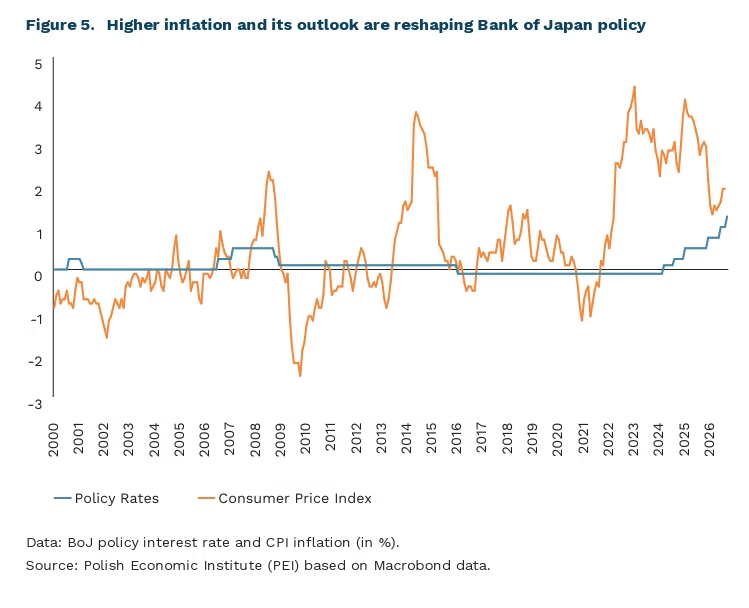
Japan is gradually moving away from an economic model that for decades was characterised by low inflation, stagnant wages and near-zero interest rates. On 18 September, the Bank of Japan (BoJ) raised its policy rate again, from 1% to 1.25%, the highest level since 1995. Only a few years ago, the Bank’s main concern was deflation and its key challenge was bringing inflation up to the 2% target. Japan maintained interest rates at negative levels for years. Today, BoJ Governor Kazuo Ueda argues that monetary policy has entered a new phase: the Bank must now also prevent inflation from persistently overshooting its target. The BoJ does not rule out further rate hikes if price pressures prove stronger.
The shift is most visible in the labour market. In this year’s shuntō – Japan’s annual, coordinated round of wage negotiations – companies agreed to average wage increases of 5.01%. This is the third consecutive year in which wage growth has exceeded 5%. In July, real wages were 2.4% higher than a year earlier, the strongest increase since 2021 and the seventh consecutive month of positive growth. Wage gains are therefore becoming more persistent, while companies are more willing than in previous decades to pass higher labour costs on to consumers. Although CPI inflation stood at 1.9% in August and core inflation at 1.7%, the BoJ expects price pressures to strengthen again, forecasting average inflation of 2.5% in fiscal year 2026.
Rising prices of imported energy are an additional source of inflation. Japan remains one of the developed economies most dependent on imported energy, with an energy self-sufficiency rate of just 16.4%. Its dependence on imported oil is particularly high: Japan imports 99.7% of the oil it consumes, and in 2024 around 95% of its crude oil supplies came from the Middle East. The United Arab Emirates and Saudi Arabia were the largest suppliers. This leaves the economy highly exposed to the ongoing conflict in the Middle East. In August alone, the value of Japanese imports rose by 28% year on year, while spending on imported crude oil increased by almost 59%.
Price pressures are further amplified by the weak yen (JPY). Despite higher interest rates, the exchange rate remains close to JPY 157 per USD, while the interest-rate differential with the United States continues to support carry trade strategies, in which investors borrow in a low-interest-rate currency and invest the funds in assets offering higher returns. A weak currency raises the cost of imported energy, food and raw materials, making it easier for higher costs to feed through to consumer prices. The authorities have also sought to counter yen depreciation through direct intervention: in two waves of operations this year, they spent more than JPY 27 trillion, with Japan and the United States acting jointly at the end of July. A sharp appreciation of the yen would also carry risks, however, as it could trigger an unwinding of carry trade positions and increase volatility across global financial markets.
Japan is now moving from an old to a new macroeconomic regime. The initial impulse came partly from abroad, through higher energy and commodity prices and a weaker yen, but domestic factors are increasingly determining whether the shift becomes lasting: labour shortages, faster wage growth and a greater willingness among companies to raise prices. A model built on low inflation, stagnant wages and zero interest rates is giving way to an economy with stronger wage growth, greater price pressures and a gradual normalisation of monetary policy. The key question is whether the BoJ can manage this transition without weakening growth or triggering a disorderly unwinding of positions financed in cheap yen.